

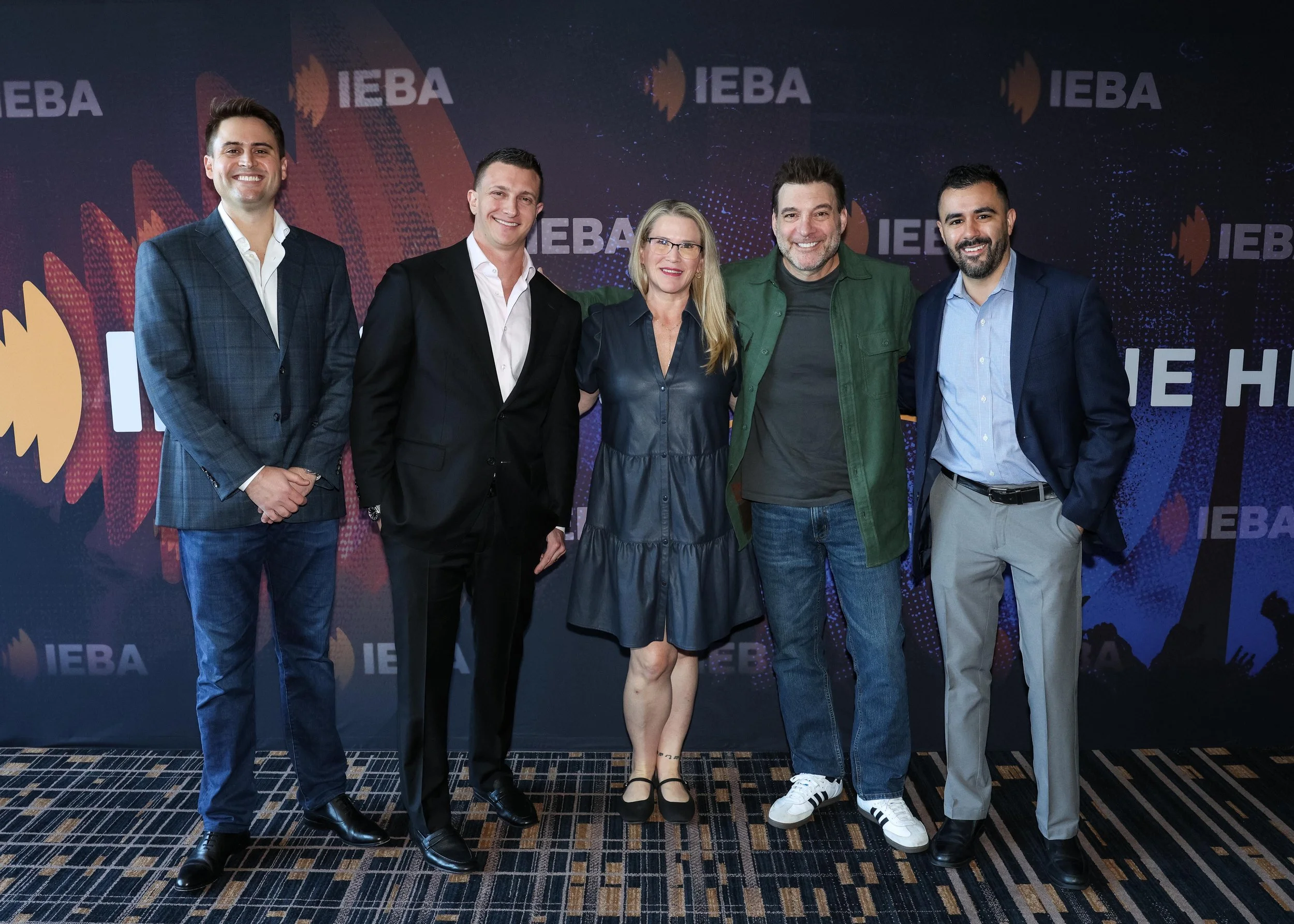
Moderated by: Spencer Zubrow, Pinnacle Entertainment - Sound Talent Group
Panelists: Joe Grossman, UTA · Ricky Regalado, UAA · Seth Shomes, Day After Day · Abby Wells Baas, WME
Sponsored by: Houston Productions
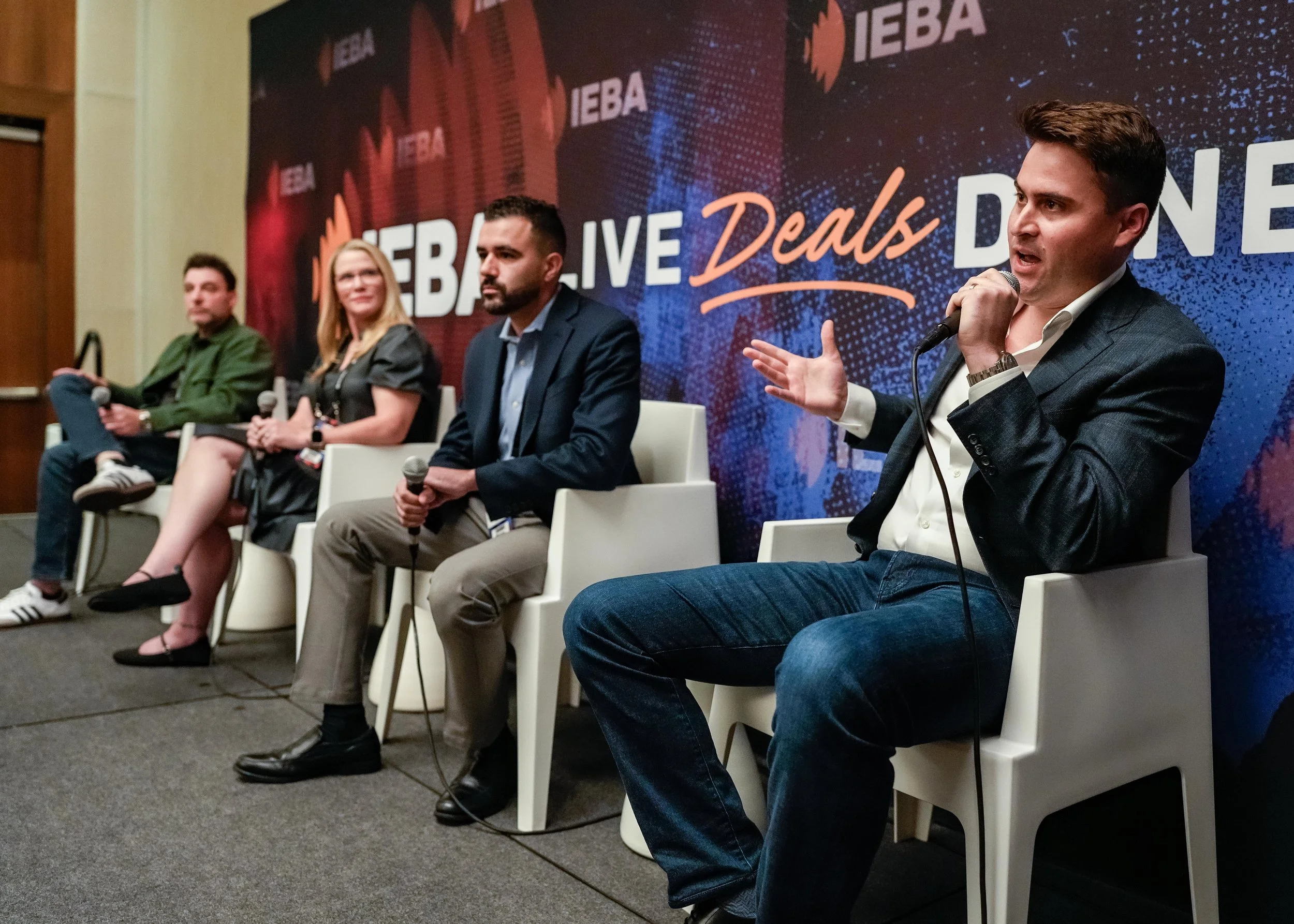
For once, the buyers wrote the questions. Spencer Zubrow, who runs the casino and fair department for the Pinnacle and Sound Talent Group partnership, said the IEBA Casino Subcommittee “wanted to try something different” and put the voice of the casino community front and center. He and a colleague called more than 200 buyers across the country and asked for “the hardest-hitting questions they’ve always wanted to ask an agent but never could.” Because the submissions were anonymous, “nobody held back, and the results were eye-opening.” The best went onto an onstage roulette wheel. “So agents, the tables have turned, and like it or not, you are all in,” Zubrow said. Kel Houston of sponsor Houston Productions, a talent buyer for tribal casinos since the early ’90s, opened the session, and the room was standing room only.
Meet the Agents
Joe Grossman is a comedy agent at UTA who specializes in booking stand-up in casinos, with a reputation for “packing rooms nationwide seven days a week.” Abby Wells Baas is a partner at WME and the first woman ever promoted to agent in WME’s country music division. With 30 years in the business, she handles the agency’s country roster across the Midwest, along with adult contemporary and comedy clients. Ricky Regalado is co-head of casinos, fairs and festivals at Universal Attractions Agency, booking rap, hip-hop, pop and the Chippendales. Seth Shomes is founder and CEO of Day After Day Productions and was IEBA’s 2025 Boutique Agent of the Year. Before his first answer, Shomes noted how far the casino track has come: “As somebody who’s been coming to IEBA for a long time and has seen the casino panels be small, look how big this casino room is.”
Ticket Prices: Know Your Market
The first spin landed on ticket price sensitivity. Buyers wrote that it is showing up “across nearly every show we’re putting up at casinos,” causing bigger losses and lower attendance, yet pricing low from the start makes it impossible to meet guarantees. Grossman pushed back. “I personally don’t think the prices are too high. I think it depends on the act.” He pointed to Matt Rife’s two sold-out shows at Choctaw, “not a cheap ticket,” and said a big agency has acts at every price point. He relies on the casino buyer to know “what price point works best for the community,” and called the squeeze “more of a macroeconomic problem than agents charging too much.”
Regalado said the first thing he asks is what the casino’s intention is. “Is that really the goal for all casinos?” he asked of breaking even. “No.” Some properties are happy with 900 people in a 3,000-seat room; for others that’s a failure. “We’re booking 50 states,” so agents can’t know every town. Buyers do.
Wells Baas said country artists are especially protective of their fans and “really want to police” ticket prices. When a buyer proposes a price an artist can’t bear in other markets, she wants to know why, and she wants the honest answer, even if it’s “I’m just trying to get to the guarantee,” so she can advise the client that “this may not be the right play.”
Shomes said agents have to tell clients the truth too: “Do you understand that if you want this money, it’s going to raise your ticket price by this much?” He prefers casino prices not get too high, so guests can still “go to dinner, game, go to the club,” because “it all factors into your pro forma.” He’s seen artists sell out and do nothing for a property’s performance, while a show at 50% capacity was “a great night for us. So it is a different model.”
Partnership After the Deal Is Signed
The next question was blunt: too often, buyers said, “the agent disappears after confirmation,” and they get passed “from assistant to assistant to assistant.” Wells Baas said it “kind of shocks me to hear that somebody disappears.” Her assistant handles contracts and chasing money, but she stays in the conversation, especially on marketing, and still prefers the phone. Grossman went further. “I disagree with the question saying it ends at settlement. The relationship never ends.” An agent who books a show and vanishes is committing “malpractice,” he said. “Stop calling that agent and you can just call me, and we’ll get a real show in there.”
Regalado said every buyer has had his cell phone since COVID, and the real friction is usually in advancing, where agents sit in the middle of management, tour managers and production teams. “We have ground transportation set up, but the artist never sent us their flights. If we don’t know this as agents, we’re kind of in the dark.” His fix: pick up the phone as soon as a problem appears. He reviews all of his roughly 200 shows with his assistant every week, out to almost the end of 2027.
Shomes said his agency is “about the strategy, not about the transaction,” and that an agent sometimes has to act as a mediator. “The client is not always right. They’re just not.” If an artist wants a yes person, “that’s probably not me.” Buyers need to trust that an agent wants “what’s fair for everybody,” not to blindly fight for the client.
When Sales Are Slow
Shomes said a soft economy makes marketing harder because “you don’t know whether it’s just your artist doesn’t sell tickets, or it’s just the region’s not good, or just everything’s down.” With buyers coming in late, marketers are holding budget for the final weeks; on his Jodeci tour, he expects a surge within two weeks of each date. He urged agents to get artists promoting their own shows, and cautioned that streaming numbers don’t equal ticket sales. Everyone has seen an act with “five million monthly listeners” that then fails to sell, he said. Use the data instead to find where an artist is strong: “If you don’t have any followers in Kansas City, let us not pretend you’re going to sell out. Let’s build you there.” His theme for the panel was collaboration, without ego. “There’s no shortcut to hard work.”
Wells Baas warned against “cookie-cutter” campaigns and urged buyers to find the actual audience. She uses Chartmetric and WME’s brand-affinity data, and follows clients on social media to see what gets engagement. Regalado said some audiences will never buy from a billboard: “They’re going to be home on the toilet scrolling.” Social media and influencer collaborations are the most effective tools for many shows. TikTok leads, but for his Gen X Tour, “Facebook is still huge.” He’d also like to see artist interviews set up earlier rather than the day before.
Grossman said UTA’s comedy department has five dedicated tour marketers, and the casino’s own marketing makes the difference. He has put the same act in competing casinos in the same market in back-to-back years, and the quality of the marketing was “the difference between a show that’ll sell out and a show that is struggling to get there.” His advice: identify a soft show early, call the agent and the tour marketer, and get to work.
Cancellations and Worst-Case Scenarios
On last-minute cancellations, Grossman said “through hell or high water, I will do whatever it takes to not cancel a show,” but when it happens, the fix is a fast reschedule and a full-court press to get word to fans. Zubrow upped the ante for Regalado: an artist three hours from doors at a sold-out show gets a DUI, the property wants nothing to do with him and the buyer won’t answer the phone. Regalado said how an agent handles problems is what separates a great agent from a mediocre one, and the answer comes down to the relationship and trying to “pay it forward another way in the future.”
Shomes, after joking “bail him out and get him to the stage,” compared it to radius violations: put the rules in writing to clients “15 times.” If a client is perpetually late, warn the buyer up front and tell the client in writing that showing up late will cost 25% of the balance. He also urged casinos to reread their contract addendums, which can effectively cancel out force majeure: “Are we actually going to be able to enforce this?” And he said agents should think twice about signing problem clients. “I don’t care about the money. We’re just not going to work with it.” He described an act that is supposed to have five members and “somehow they magically always show up with two.” Wells Baas added that no two situations are alike, so get all the facts before reacting.
Where Casino Entertainment Is Heading
The final spin asked where the business goes in five years as legacy acts age out, casinos chase younger players, operators consolidate and entertainment is expected to stand on its own. Shomes said buyers ask for something new, then ask for ticket history on acts that have never played a casino. “No, it’s brand new. I can’t.” Casinos are chasing the 21-to-35-year-old gamer, but still need classic acts like the Commodores, Paul Anka, the O’Jays and Kool & the Gang for core slot players. He pointed to Bingo Loco, now “the hottest thing on our roster,” as proof of what a new concept can do when it markets itself well, and urged buyers to try new things with a strategic partner rather than “just being sold a date and good luck.”
Wells Baas said many properties now treat shows as hard tickets, and that’s fine if buyers are upfront about their goals, whether it’s a VIP night or a push for a younger crowd. Some younger artists want a GA standing room, not a seated ballroom. A $20,000 budget and a $150,000 budget open very different doors, and “what’s working in Detroit may not be the same thing that’s going to work in Vegas.”
Grossman asked the room for a show of hands of casinos that consider themselves hard-ticket venues and found a minority. His advice: don’t. “The goal should always be to drive gaming.” Positioning as a hard-ticket venue puts a casino in competition with every other hard-ticket room in its market. He said casinos are “the preeminent venue” for comedy, and younger comics like Ralph Barbosa choose casinos over theaters because they love to game. A host who sets up a blackjack table in the green room goes a long way: fans see the act on the floor, and then they play too. “It’s all one thing.”
Regalado said the Gen X Tour has worked because influencers feel personal to fans. “They want to be a part of something.” Boy band era acts aimed at women 35 to 50 are selling more on nostalgia, and MMA and Latin programming are doing well. He urged buyers to program for the demographics around them, “not just for diversity’s sake,” because “there are gamers out there and they do spend.”
Shomes added a plea for buyers to get to know artists again. Too many now say “I didn’t want to bother them.” He built Aaron Lewis’s casino business 18 years ago partly by having him hang out with buyers, and some of those rooms have booked him 17 or 18 years in a row. “Any of you want to hang out with my artist, please.”
Building the Next Generation
Zubrow, who credited Shomes with building his career, closed by asking how to develop the next wave of casino agents and buyers. Shomes passed along Paul Anka’s advice from their six years together: “You got to be a student every day.” Teams need a culture where “no question is too silly to ask,” he said, and he’s more upset when someone doesn’t ask for help than when they make a mistake. One of the biggest thrills of his career is working with his own son, who is joining the company’s casino work. “It doesn’t always have to be a confrontation or an adversarial relationship between agent and buyer. It can be a collaboration.”
Wells Baas told young buyers to build relationships with agencies and treat them as partners. Because she books hard tickets, soft tickets and festivals across her states, she can tell a buyer whether a casino date is the right play at that point in an artist’s career. “Don’t be afraid to call or email, but I prefer calls.” Regalado, whose agency has 16 agents at IEBA this year, said he mentors his team to see casinos as “a relationship business,” not an easy booking, and that a year or two of seeing the same repeat buyers is what turns an assistant into an agent. Zubrow ended by thanking veteran buyers like Kel Houston for sharing their stories. “Reach out and connect,” he told younger buyers. “They’re more than happy to talk to you.”
Key Takeaways
Ticket pricing works best as a shared decision. Agents rely on buyers to know their markets, and buyers should be honest about their goals, including when they’re just trying to reach the guarantee.
Success at a casino isn’t only sold-out shows. A 50%-capacity night can be a win if it drives gaming, so agents should explain the casino model to their clients.
The relationship doesn’t end at settlement. Call the agent as soon as an advancing or marketing problem appears.
Late buying is the norm, so hold marketing budget for the final weeks, get artists promoting their own shows, and use data to find real fan bases rather than relying on streaming numbers.
Put expectations in writing for problem clients, warn buyers up front, and review contract addendums that undercut force majeure.
Casinos shouldn’t position themselves as hard-ticket venues. Entertainment and gaming work as one business.
Influencer tours, nostalgia acts, Latin, MMA and other diverse programming are bringing new players in, but every market and budget is different.
Get to know the artists, and invest in mentoring the next generation of agents and buyers.