

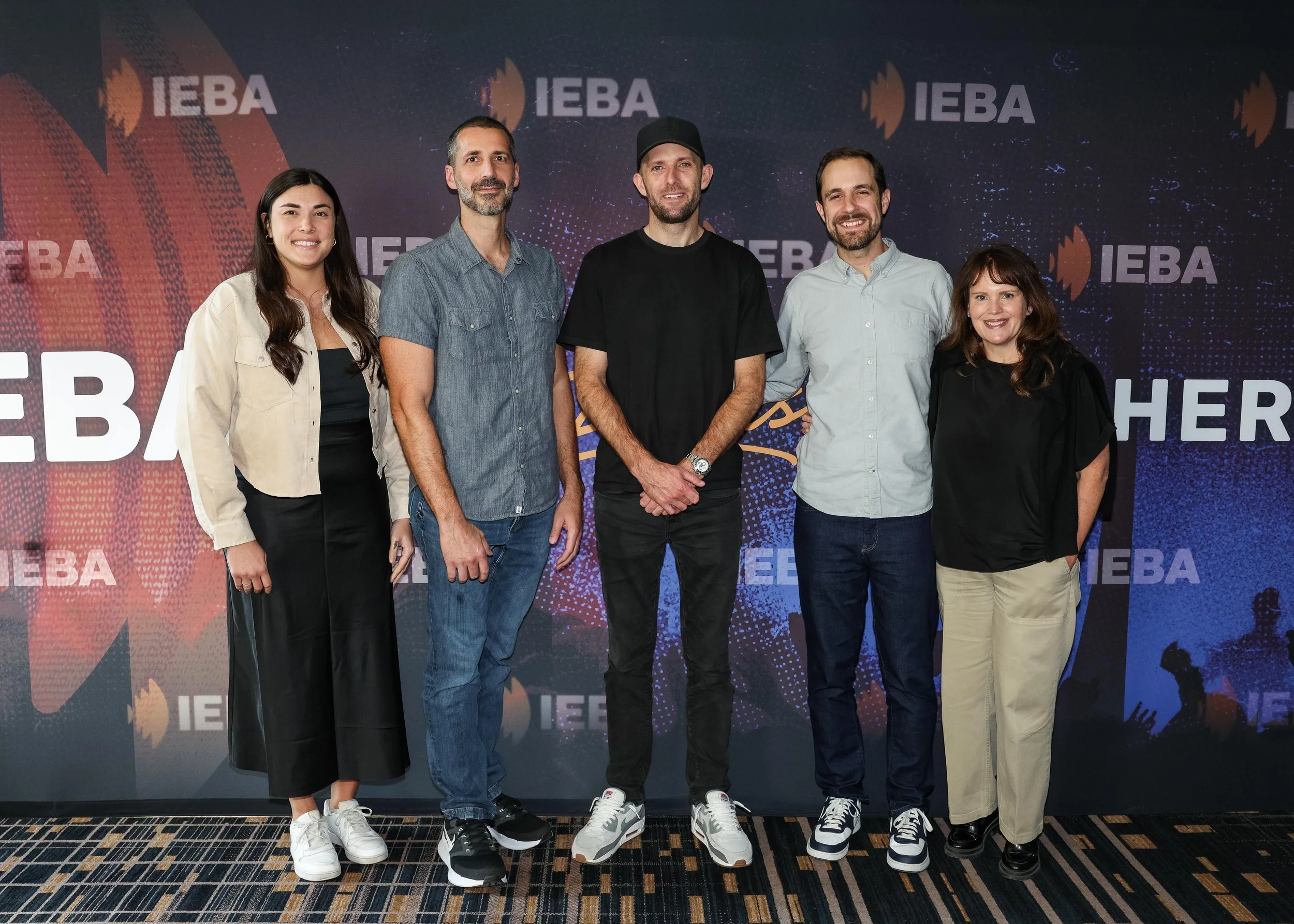
Moderated by: Andrew Farwell, Outback Presents
Panelists: Tom DeKorn, Jeff Roberts Agency (Christian) · Heidi Feigin, UTA (Comedy) · Tara Klee, AEG Presents (K-Pop) · Matt Schultz, CAA (Podcasts)
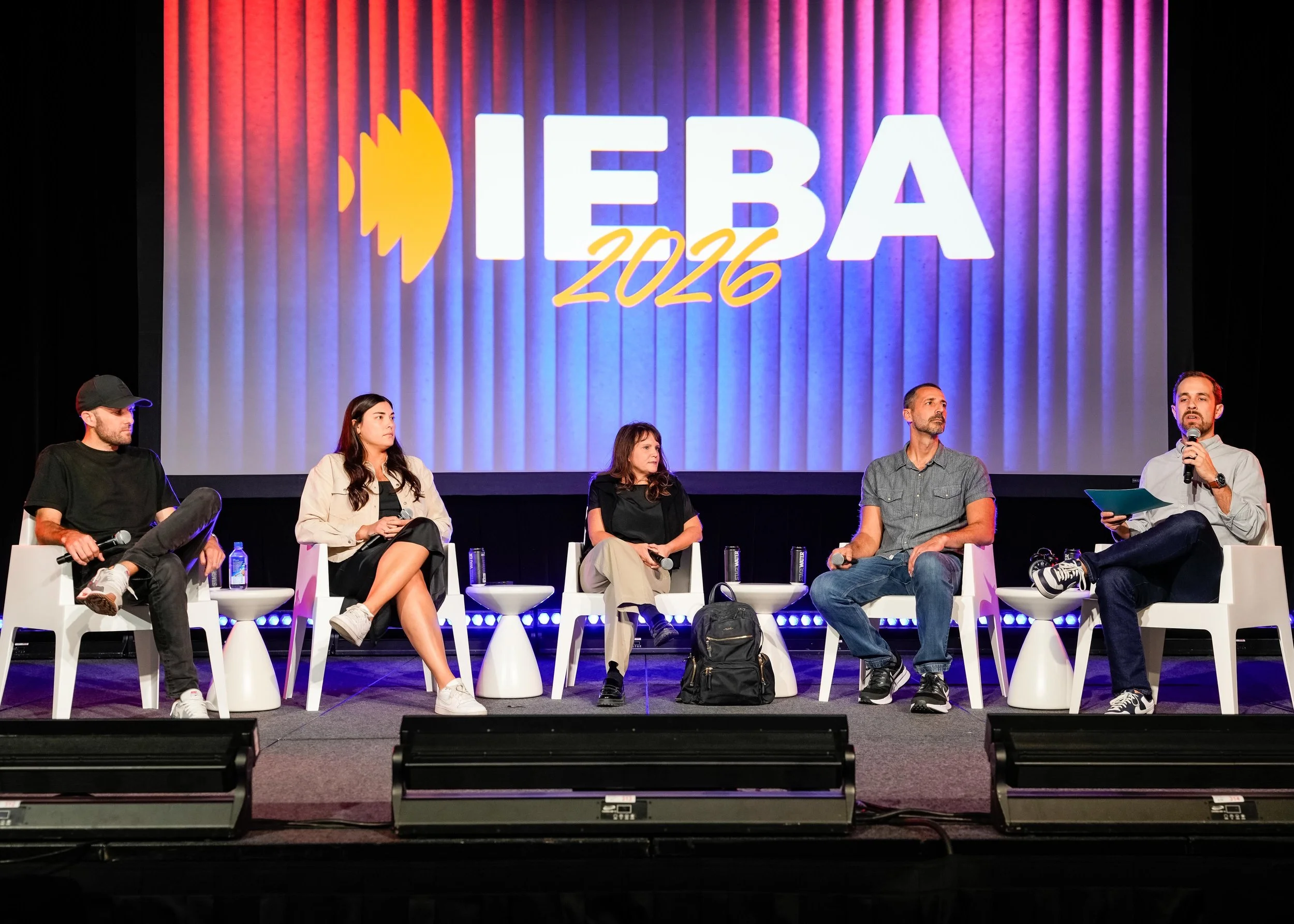
IEBA tried something new with its Insider Sessions. Andrew Farwell of Outback Presents said the format grew out of years of member feedback: attendees love the panels, “but really they want that next level,” something “a little bit more intimate, a little bit more one-on-one.” The answer was a set of “super-sized roundtable opportunities” on four trending genres (comedy, Christian, K-pop and podcasts), each led by an expert at a station in a corner of the Grand Ballroom. Before the room split into 15-minute rotations, Farwell brought the four leaders up for introductions and a quick round of questions to get attendees thinking about what to ask. The room was a mix of talent buyers, venues, and fairs and festivals, and Farwell said these were genres that are “a little bit new to IEBA” after 56 years of rock, country and fairs.
Meet the Leaders
Tom DeKorn has spent 23 years as a booking agent at Jeff Roberts Agency in contemporary Christian music. He got his start promoting shows on his college campus, realized that wasn’t the gig for him, and as a lifelong Christian “felt called” to move to Nashville.
Heidi Feigin is a partner and agent at UTA, where she has worked for 18 years, most of them in Los Angeles, before a recent move to Nashville, “where comedy is really taking off.” She started in the William Morris mailroom and spent almost a decade there, so she has “seen a lot of different iterations of the comedy business.”
Tara Klee, a director in touring at AEG, has been with the company for two years after eight years at MSG Entertainment, where she started as a bookings coordinator and later booked K-pop, Latin and international artists. She now focuses on K-pop and East Asian artists. “I think K-pop has grown a lot over the years,” she said, “and there’s a lot of diversity now across the fan base.”
Matt Schultz works across comedy and podcasts at CAA. Before that he was a promoter who financed and produced shows in the Northeast. He came to talk about how podcasts have evolved live and expanded into non-traditional touring “outside of just comedy.”
The State of the Business in a Word
Asked to sum up live entertainment right now, Klee called it “ever-changing,” which is “exciting and also challenging at the same time.” DeKorn said “divided”: some things are “succeeding at a really high level,” while others “this fall has been dragging and struggling.”
Feigin chose “normalizing.” Comedy, she said, has come through “one of the biggest booms we’ve ever had,” and the return to a normal trend “can feel scary,” but the business is still robust. “What we had prior to today was unsustainable, right? So it’s just evened out.”
Advice Worth Keeping
DeKorn shared a line his boss was famous for: “You’re either an example or a warning.” He said he has learned from plenty of warnings, and with more tenure his goal is to be “somebody worth following” who can mentor the next generation.
Klee’s advice was to never forget the fan experience. It’s easy to get caught up in deals, she said, but fans “are the ones keeping our business going every day.” She urged everyone to step back and think like a fan buying a ticket: “How does this make me feel? What’s my experience when I get to the venue?”
Fight for Every Seat
Feigin said marketing turned out to be “probably something I didn’t expect to be the biggest part of my job,” and today that means “completely analyzing ticket prices all the time.” Her lesson is to “never stop fighting for every last seat to be sold.” Don’t rest on your laurels, she said; be ready to pivot and try new ways to market. One of her favorite tactics is the single-seat offer. “I don’t care that there’s only singles left. The show isn’t sold out,” she said. “Just keep pushing until you get every last dollar you can get.”
Schultz, building on Feigin’s point about normalization, said agents and buyers need “strong opinions on pricing shows correctly,” and must educate clients about the current climate. Getting the price right before a show goes live avoids the harder conversations about “tickets not moving, or seat maps we might not enjoy looking at,” which are “a tougher thing to fix down the road.” Farwell noted that pricing and the fan experience were themes likely to come up again at the stations.
What Keeps Them Going
For DeKorn, motivation comes from the message. Contemporary Christian music is a genre built around a message, so success means getting artists in front of people to share it. Shows have to work financially, he said, “but then not miss the ministry component.” The most satisfying shows serve both. “It’s great that the money works, but if the message component’s not there, it’s less fulfilling.”
Klee, a K-pop fan since her teens, said she is “a massive fan of live entertainment.” What excites her most is the full fan experience at K-pop and J-pop shows, where fans follow every move of the artists, camp out the day before and wait hours for VIP. “They’re buying an experience versus just going to see a show.”
Feigin, a self-described type-A personality, said she is motivated by winning, for the artist, the venue and the promoter. She loves discovering an act and building it “from a comedy club act all the way up to an arena act, or now even a stadium act,” but it’s the “instant gratification of each and every show” that drives her.
Schultz said his motivation is the journey with clients: pushing boundaries, trying something new and helping execute their “off-the-wall crazy ideas,” then seeing how happy they are when it works.
Into the Roundtables
With the lights up, attendees headed to the four stations for 15-minute conversations, with the option to stay or rotate when the bell rang. Farwell encouraged everyone to move around, and to come with questions rather than expertise. “Don’t feel like you need to be experts,” he said. “This is going to depend on you, really.”
Key Takeaways
Comedy is normalizing after a historic boom. The business is still robust, but the previous pace was unsustainable.
The market is divided, with some shows thriving while others struggled this fall.
Fight for every last ticket. Analyze pricing constantly and use tactics like single-seat offers.
Price shows correctly before they go on sale, and educate clients about the current climate. A bad seat map is hard to fix later.
Never lose sight of the fan experience. K-pop fans in particular are buying a full experience, not just a ticket.
In Christian music, a successful show serves both the business and the message.