

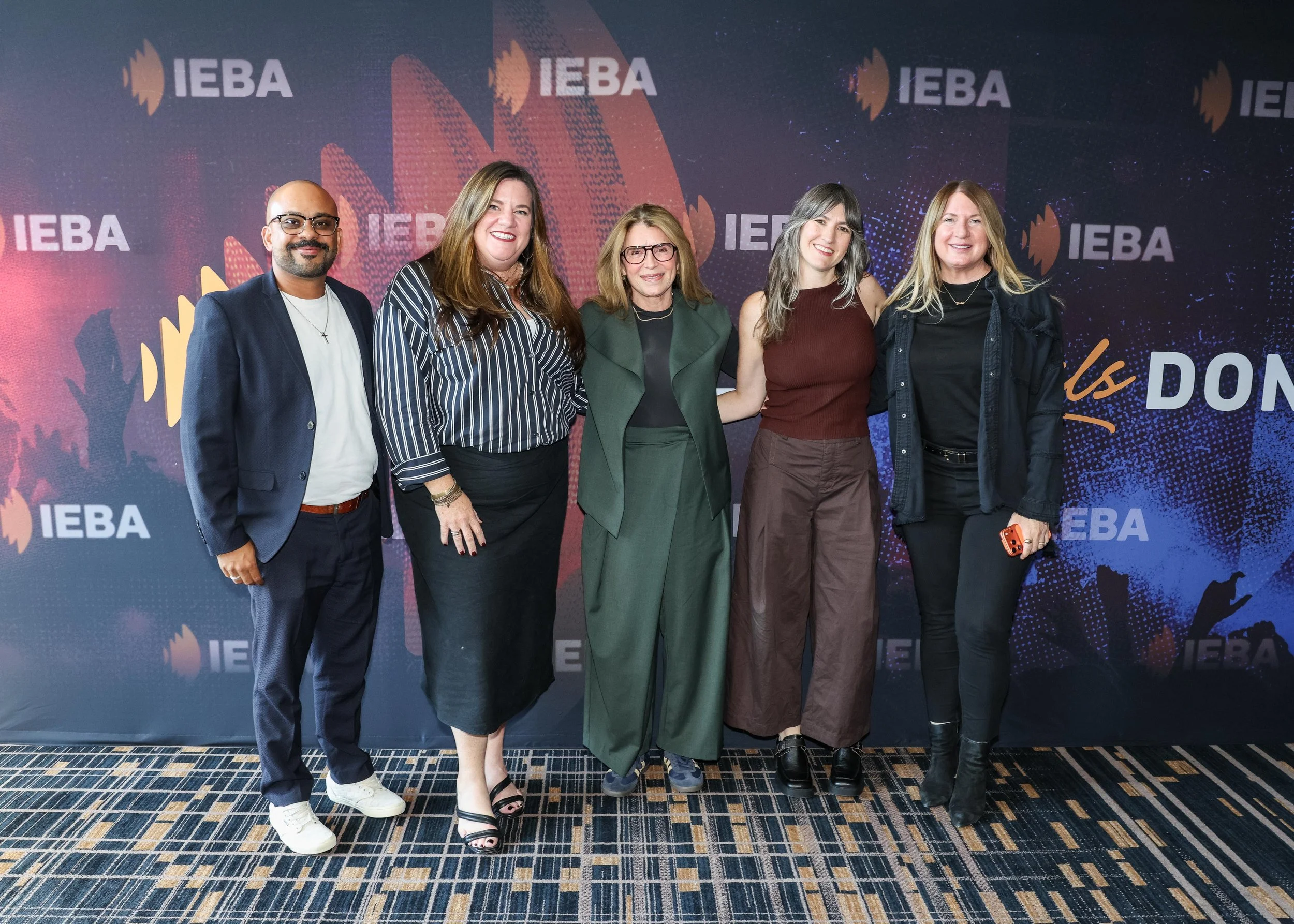
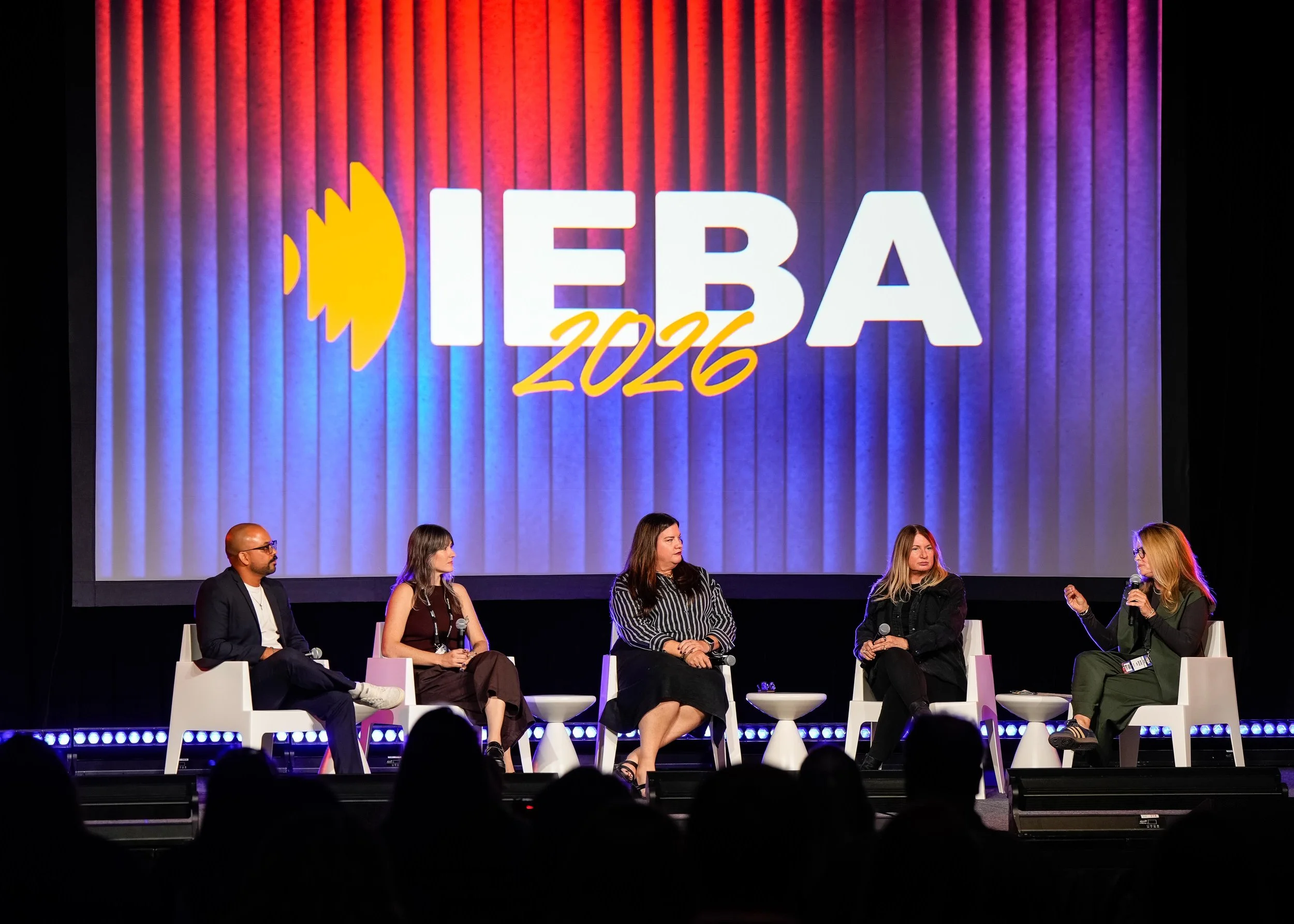
Moderated by: Michele Bernstein, Michi B, Inc.
Panelists: Kishore Ramlagan, OCVIBE · Lauren Squazzo, The Bowery Presents / AEG Presents · Sara Williams, WME · Megan Wilson, Red Light Management
Michele Bernstein of Michi B, Inc. opened the marketing panel with a reality check. Asked whether it’s possible to sell more and spend less in the current climate, “I would probably disagree,” she said, “but next topic.” What live entertainment marketers sell is unlike anything else, she said: “We sell the in-real-life experience. It’s connective, it’s aspirational,” whether the act is a band, a podcaster or a kids’ show, “and what we sell is the ticket, which is the conduit to getting there.” The last decade has brought a chaotic news cycle, more data than ever, fully dynamically priced seat maps and a digital shift that turned a $500 to $700 Facebook buy into half the ad budget. The panel was about how to adapt.
Stretching Budgets With Shared Media Buys
Ten years ago, Bernstein said, marketers worried about having enough content to fill a volume media deal. Now there’s plenty. Lauren Squazzo of The Bowery Presents / AEG Presents said combining spends “is a really great way to expand your budget and extract the most from it.” When a big artist brings a large media buy, smaller shows can be tacked onto the same contract. That removes the minimum spend and lowers the barrier to entry, so small events can join campaigns they could never afford alone. “More money in the market is better for everybody,” she said.
Sara Williams of WME said agents look for promoters who bring that volume to the table, such as a standing billboard deal that can put a developing act on a board “there’s no specific budget to buy” for that week. Promoters who commit a year’s spend to an outdoor company or radio station can ask for favors and shorter timelines in return.
For Kishore Ramlagan of OCVIBE, which is opening a theater in its Anaheim district, the goal is to “own the mile” around the venue. Southern California has “a lot of competition. Venues are popping up like crazy,” he said, so billboards and local business partnerships help position the district as a primary market and a must-play.
Local Relationships Are the Lever
Megan Wilson of Red Light Management, who came to management from the promoter side, said every link in the chain should leverage its relationships, from a venue’s media stations and charity partners to its databases. Those relationships pay off when shows need favors, and the favors go both ways. When a program director’s granddaughter wants to see the biggest pop act, “you’re going to have to find some venue comps for that, because that’s how you leverage that relationship.”
Williams said one of the most dependable tactics is “not the most creative, but it gets it done”: a dinner-and-a-ticket deal where a restaurant near the venue adds a $50 gift card to a pair of tickets, with exposure on social media and in the restaurant itself. In Denver, where she came from, breweries would even put an artist’s name on a beer. “As agency and management marketers, we’re like, the more local the better,” she said. “The spots and dots of it all is what we expect, and the sauce on top is what differentiates and what works.”
Ramlagan said the key is fitting the partner to the audience so promotions feel organic rather than “buy our tickets.” He pointed to a listening party at a vinyl record store in downtown Orange for an artist playing that weekend, partnerships with local LGBTQ bars, and country bars where fans ride a mechanical bull to win tickets to Thomas Rhett, PBR or Dan + Shay. He also ties giveaways to theme nights with the venue’s home tenant, the Anaheim Ducks, “to make it feel like Orange County.”
Branding Campaigns That Sell Many Shows
Ramlagan described a country-themed billboard placed on the route to the beach in Newport, where much of the audience comes from, promoting Thomas Rhett, Dan + Shay and Zach Top together with a cowboy-hat extension and a matching poster campaign. A quick team brainstorm and a board that “was not too expensive” made it one of the district’s strongest campaigns. “It’s important to showcase what’s happening within our building with no egos attached to it,” he said. “We’re trying to sell tickets.”
Squazzo said it showed that “you don’t always have to have a large budget to help feed the smaller fish.” Bundling many small shows is “a great way to amortize those costs without sacrificing share of voice.”
Traditional Media Still Makes It Feel Big
Bernstein called herself a big believer in traditional media. “It needs to feel big to go on sale. You can’t just run digital ads and not have it haloed with all the other stuff.” Wilson agreed that radio and other traditional partners “are still just as valuable as they have ever been,” with social media layered on top. “There’s a reason they call it mass media,” Williams said. Local media partners can be called on “for the added love,” while with the algorithm, “some days you’re finding a needle in a haystack.”
Squazzo added that the media mix has to match the artist and the budget from the start. An act without radio play needs other paths to fans. Ramlagan said busy markets also call for creative angles. For a Jonas Brothers show, his team partnered with a local TV weathercaster on a social video, and it did so well they never had to buy the TV spots they had planned. Bernstein said KTLA turned it into a story that ran all week. “You couldn’t escape it.”
Trading Tickets Wisely
Promo ticket trade is “a big piece of the puzzle,” Bernstein said, and can buy out-of-home and radio for less. Squazzo said it only works if bookers, agents and local marketers talk up front about how many tickets are available and at what price levels. Front-row seats out of the gate can win a stronger radio proposal, while other comps may be held for a later phase. Williams noted some venues and promoters build a set number of trade tickets into every show, which supports long-range partnerships, so a fan of a major act can also benefit a smaller one on the same calendar.
“Tickets are money,” Wilson said, and she prefers to “use the budget, and use promo tickets sparingly and wisely,” reassessing later if needed, since higher-level artists can earn a back end when shows sell well. She asked marketers to know where an artist is in the album cycle and to ask about merch packs. Vintage merch the team doesn’t want to pay to store can give a radio station or media partner something different from tickets. Ramlagan suggested setting aside budget to buy tickets when comps aren’t available, or packaging several shows together “so that they’re all getting shared love.”
Bernstein said a motivated radio program director “is a PD that’s going to help you when it’s good, when it’s bad, when you’re struggling,” but “the love’s got to go both ways.” Ramlagan said that even without budget, he keeps partners close by taking them to lunch and being open about what’s coming.
Putting Content to Work
Bernstein said content is more valuable than ever for cutting through the noise. Williams said agents and managers often sit between a promoter with a good content idea and an artist who isn’t used to it, and they work to draw out more material. Small fixes help: a lyric video with a new overlay, or an animated ad mat when no video exists. “Sometimes we have to be more creative than we’d like to be,” she said. “That’s the beauty of AI, sadly. But also, please don’t send us AI unless you’ve gotten approval.”
Wilson said artists’ appetite for content “runs the gamut.” “I have artists that will do anything. They’ll do gymnastics for you if you ask them to,” while others just want existing footage repurposed. More and more, she said, artists see the social landscape and are open to ideas. Bernstein said capturing content on the road is now part of what artists pay for, because “it’s easier to sell tickets when artists are on tour and people can see what the show is.” The FOMO it creates can be amplified with paid media. “The trick is to put the content to work.”
Squazzo said the content has to do its job, too. A flat ad mat can work for a tour that needs no explaining, but “I can’t tell you what a show is on a billboard if it requires a lot of explanation.” Without footage or voiceover that tells the story, “those ads are just going to spend.”
Wilson also urged local marketers to build relationships with creators in their markets, such as a popular local dance troupe, which can help without involving the artist directly.
Reading the Data and Knowing When to Pause
With click-throughs, return on ad spend, cost per ticket and event page visits available in real time, Bernstein said, marketers can “be really smart, really fast” and spot a creative problem early. Squazzo said underperforming spend can be held for a better asset. Wilson said the conversation with artists isn’t uncomfortable “as long as we’re coming to them with ideas and not just, well, it’s just not working.”
Bernstein said campaigns need room to breathe, since “it takes 36 hours for the algorithm to normalize.” Williams encouraged testing without committing the full budget and borrowing what works in other markets, such as Reddit or Bandsintown. If it fails, “it was a good experiment, worth the try.” Ramlagan said venues value the freedom to create something unique to their market when footage is thin.
Squazzo warned against spending just to spend. “You need to make sure that you are babying that budget,” she said, and pooling tests across several shows provides a safety buffer. Bernstein said the team needs the discipline to tap the brakes, pull a campaign and “hold a beat” when tickets aren’t moving. When sales are strong past the usual two-week window, Squazzo said, extend the spend. Williams said local intelligence matters on both sides: pausing before a competitor that “sucks all the air out of the market,” and knowing when to come back. Bernstein said the best chance of success is “at the intersection of noise,” when an artist’s cycle, the algorithm and market traffic all line up.
Pricing Is Marketing
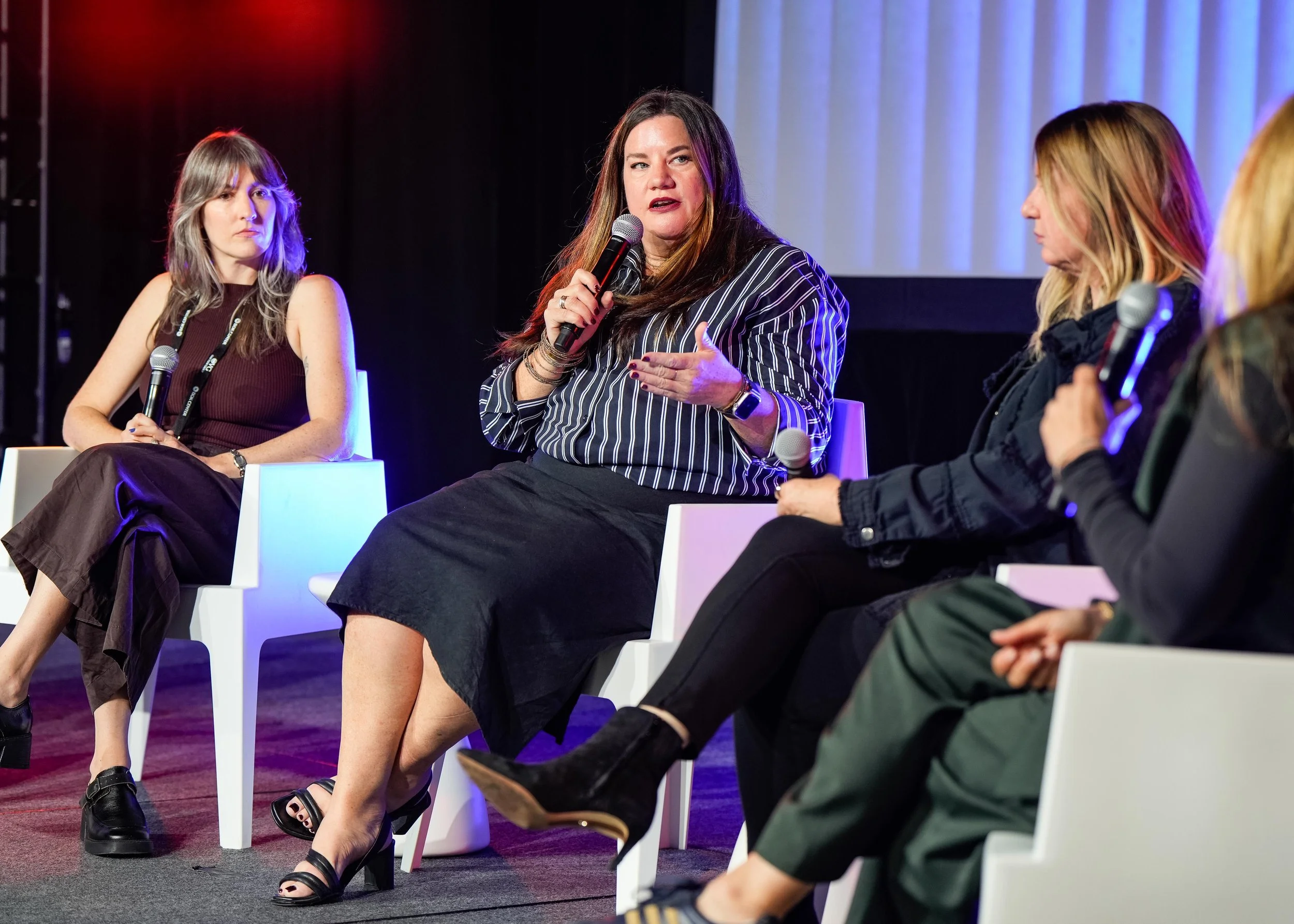
“Pricing is as much marketing as marketing itself,” Bernstein said. A fan can click through an ad, see a ticket price and walk away, and “it’s a lot harder to get them back.” Wilson said rising costs for trucks, buses and fuel make touring expensive, but “I would rather leave a couple of dollars on the table than be struggling to sell tickets.” Prices should fit the market, whether that’s Los Angeles, Des Moines or Paducah.
Williams said leaving “a little meat on the bone” is good. “We’re not American Airlines. We’re not Marriott hotels,” she said. Artists have to stand behind their prices, and in a “scalper-friendly” U.S. market, the balance between value and resale “is as much a science as it is an art.” Multiple price levels that reflect the true value of each section let more fans find a ticket that works, while a three- or four-price house can leave out people in the middle.
Bernstein said the presale map tells you right away. “If you’re selling front to back, inevitably you’re right. If you’re selling back to front, you’re wrong.” Squazzo would rather price up when demand is strong than try to quietly win back fans after a price drop that upsets those who already bought. Bernstein added that repricing has trained fans to wait, when “nothing sells tickets like sold tickets,” and Squazzo said retargeting fans who already balked spends money that could have found new ones.
When the Budget Runs Out
With the budget spent and bodies still needed in the building, Squazzo said the answer is trade, bonus inventory and local relationships. A local marketer without a solid rate deal, package structure or added-value bank with partners should “rethink” those relationships. Email has limits, she said, since those fans already decided not to buy and might unsubscribe. Ramlagan pointed to OCVIBE’s tenant audience, using arena screens, in-game personalities, players, district screens and TV broadcasts for promotions.
The panel closed on the same theme it started with. “Relationships, relationships, relationships,” Wilson said. “Never fear picking up the phone and asking.” Williams doubled down: “It is a lost art, picking up the phone and negotiating. Do it.” Squazzo’s last word was to be creative, especially with no budget, and to use the team to find outside-the-box moments that could go viral.
Key Takeaways
Pool media spends so smaller shows can ride on larger buys and get share of voice they couldn’t afford alone.
Local relationships with media, businesses, creators and program directors are the most valuable lever, and they have to go both ways.
Traditional media still makes a show feel big. Pair it with digital rather than replacing it.
Plan promo ticket trade and comps up front, and communicate what’s available across booker, agent, manager and local marketer.
Content has to explain the show and be put to work with paid support, and AI-generated assets need artist approval.
Use real-time data to pause, extend or redirect spend, and lean on local intelligence about competing events.
Price for the market and leave a little on the table. It is far harder to win back fans than to price up when demand is strong.