

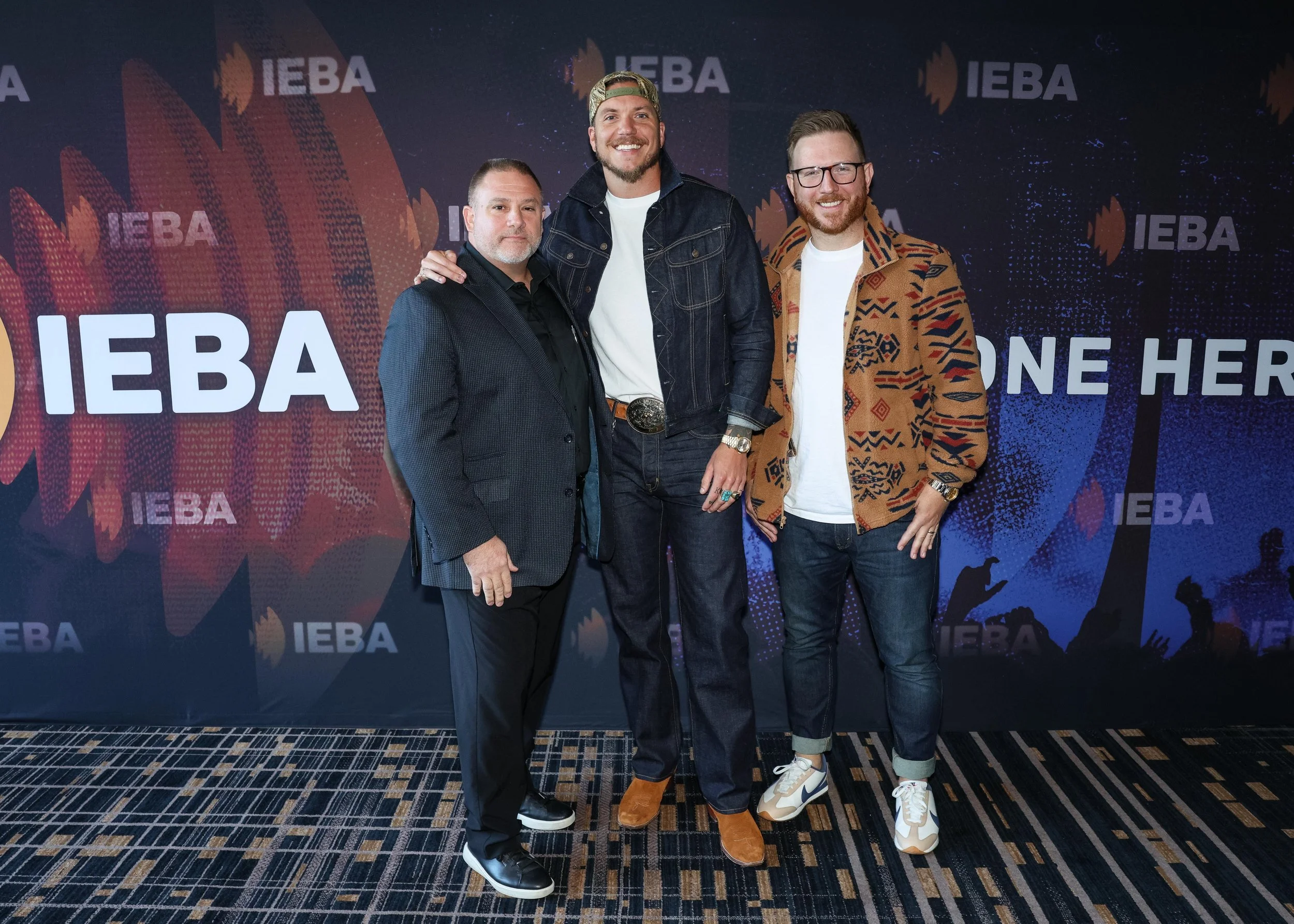
Moderated by: Zane Collings, Jacksonville Jaguars
Speakers: Brandon Lake · Jonathan Roberts, UTA
Sponsored by: POLLSTAR
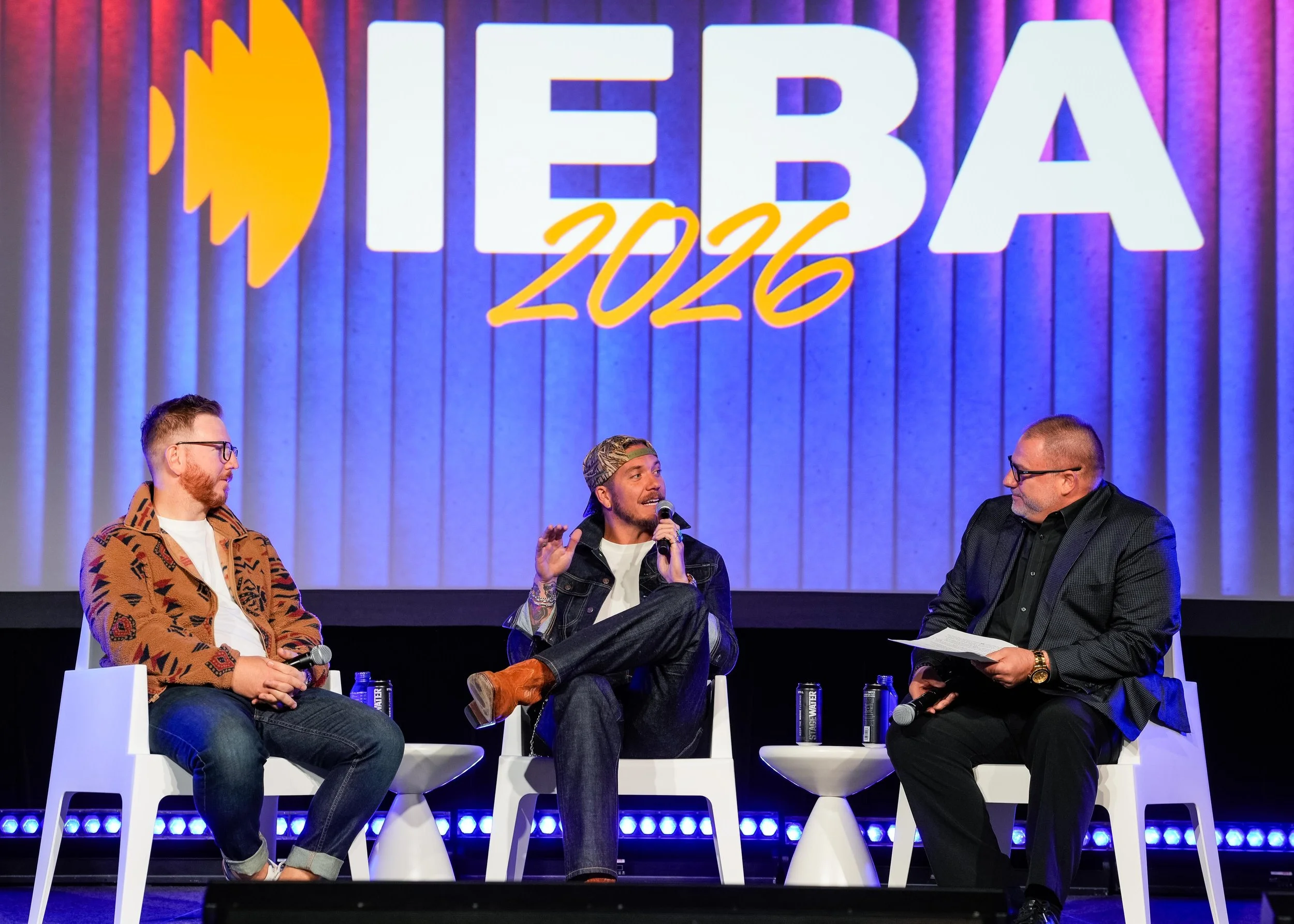
Zane Collings of the Jacksonville Jaguars welcomed two guests to the Grand Ballroom main stage: Grammy-winning worship artist Brandon Lake and Jonathan Roberts, who leads UTA’s Christian music efforts and first worked with Collings during his decade as a promoter. “Do I need to introduce the gentleman to my right? I don’t think so,” Collings said, before taking Lake back to where it all started.
A Calling That Never Changed
Lake grew up in the church as a pastor’s kid and said worship has never become anything other than what it was when he was 15. “I think that’s why maybe God’s blessed it,” he said, “because I’m still doing the same thing I was doing when I was 15 years old.” He called himself a sponge who will “steal like an artist” from the pastors, artists and mentors around him.
Songwriting came first. “I don’t know that I ever really, truly wanted to be an artist. I just loved writing songs,” he said. When one song traveled “outside of the four walls of the church,” his phone started ringing, and with no manager, he tracked his bookings in his phone’s Notes app. “I double-booked myself so many times, and I was drowning,” he said. His manager, who still keeps a screenshot of that note, “saved me.”
Lake said a calling is less one dramatic moment than “God has always brought the right people at the right time.” The discipline since has been saying yes only to the right invitations. “Not every invite, just because it’s good, is the right one,” he said. He and his wife make every decision together, and then with his team.
Raising the Bar for Christian Touring
Roberts spent about 10 years at Premier Productions, now TPR, where he worked with Hillsong United, saw the start of Lauren Daigle’s rise and began partnering with Elevation on its second tour. He said Christian touring long meant “very inexpensive ticket prices, low production value,” and he wanted to change the comparison. “I feel a call to excellence more than anything,” he said. “If we’re watering down excellence because we think it’s the only way to do something, I think we’re missing the boat.”
Instead of measuring against “the best thing in the space, in the bubble,” Roberts wanted Christian shows held up against every genre on performance, influence and the venues they play. He recalled a Hillsong Worship, Casting Crowns and Elevation show at TD Garden in Boston that may have been the building’s first Christian show. “I just don’t want to be playing in the sandbox with ourselves,” he said.
Lake jumped in with an analogy. “I don’t think the best way a Christian shoemaker makes a Christian shoe is by making an average shoe and putting a cross on it,” he said. The better way is to make an excellent shoe that starts a conversation. “Why don’t we just make excellent music that speaks to who we are and who we’re called to be?”
Tattoos, Grinding and Relationships
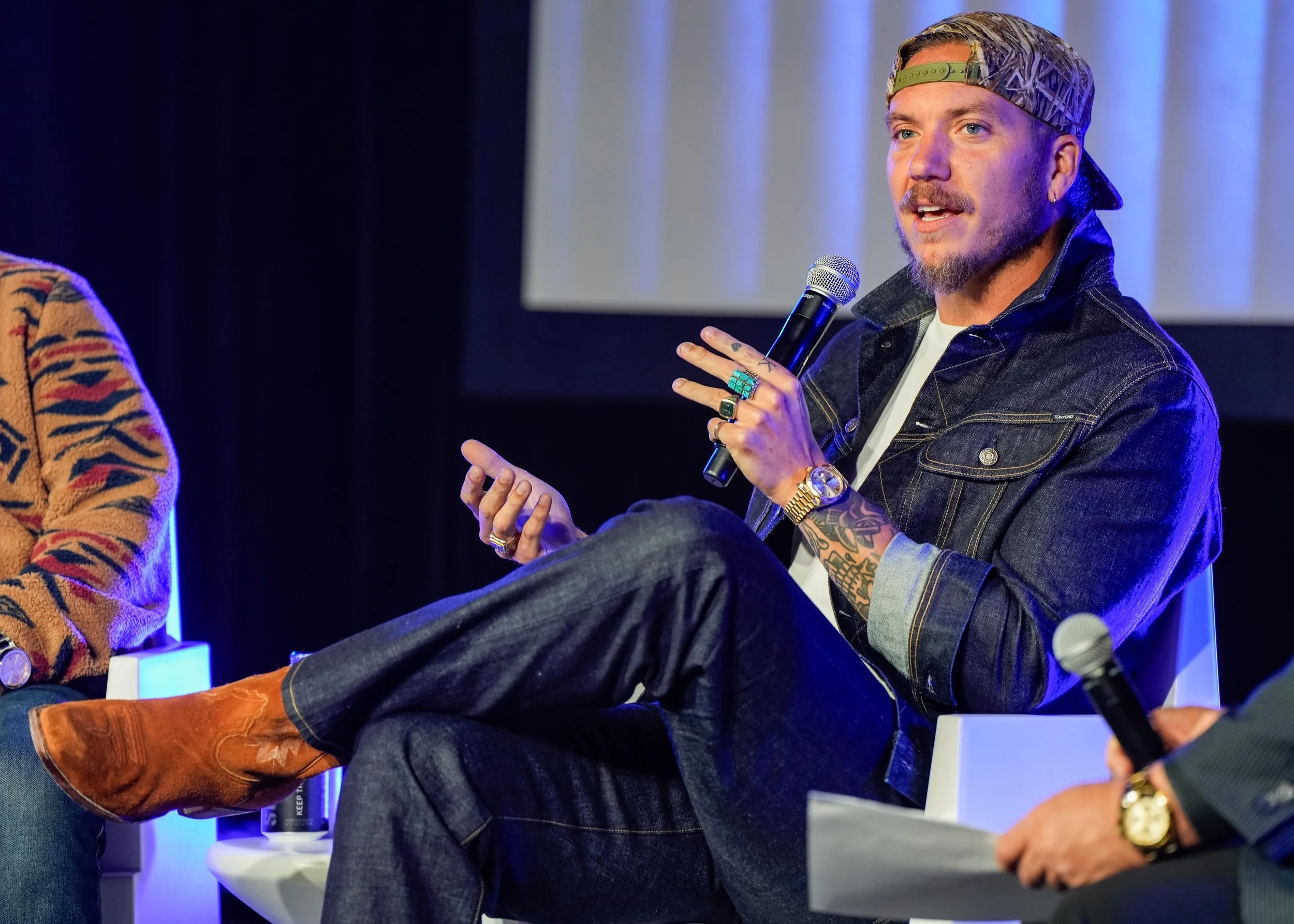
Collings brought up Lake’s self-funded first album. Lake raised $20,000 but needed $30,000, so he offered to tattoo backers’ names on his leg. “I have 23 last names tattooed on my upper thigh,” he said, with a lyric from Creed’s “Higher,” a sound-check staple on his first tour, on the other leg.
The jump to arenas wasn’t one breakout moment. “It was just being faithful for a long time, being unseen,” he said. An invitation to a songwriting community in Atlanta turned into an artist collective that “blew sky high” during COVID, where he said he was “this one white boy amongst a primarily African-American group.” That experience taught him to grind and led to writing with many others. “It’s all relationship,” he said. “The most beautiful things in life all happen from relationship.” He now finds it hard to write alone. “You create something that you never could have created by yourself, whether that’s an event or a song.”
Collaborations Built on Respect
Lake rejected the idea that his collaborations are about converting anyone. After seeing Jelly Roll perform at the CMAs, he sent him “Hard Fought Hallelujah,” thinking no one could relate to its lyrics better. Jelly Roll had already heard it on TikTok, shortly before throwing his phone in the river after his Bridgestone show, and assumed Lake was a secular artist. Lake loved that. “I’m a Christian who happens to make music,” he said. “You don’t have to believe to come to my show. You don’t have to believe for us to collaborate. You belong before you believe.” Jelly Roll’s advice to get a flip phone didn’t fully take. “I changed my number a few days later,” Lake said. “I met him halfway.”
Nick Jonas came to Lake’s writing camp, which Lake had billed as a country camp before deciding “anyone is welcome.” They wrote several songs and recorded the one that felt most authentic. Lake said he is “not banging down the doors” of celebrities. A goofy dance video he posted led to a message from the viral artist he’d been compared to, saying “Hard Fought Hallelujah” got him through one of his hardest times. “It is lonely doing it alone,” Lake said. “But it’s so much better when you bring people with you.”
Protecting Family, Health and the Long Game
Asked how the team protects Lake’s mental health, Roberts said his own filter starts at home. “If this work was ever going to cost me my wife, or my kids, I’d give it all up in a heartbeat,” he said. Roberts has four kids and Lake has three, and that shapes which opportunities he brings to any artist. He pointed to UTA’s new artist Jamie McDonald, performing at that night’s showcase, who already had 100 to 110 possible or confirmed dates by January. “We looked at each other and we were like, we’ve got to stop, because if we keep going, she’s going to burn out,” he said. For Lake, the question is “what the next five years, the next ten years, look like.” The lesson: “No is not an incorrect answer.”
Lake said his team asked “what’s on your heart?” from day one, and they now joke about chasing no’s. “There are more no’s than there are yeses,” he said, “because that means our yeses are going to be so awesome.” He admitted the way he started “was not sustainable,” and that as a person of faith, putting his own health first felt backward. “If I don’t take care of myself, everyone’s getting the worst of me,” he said. He wants enough energy left to wrestle his three boys when he walks in the door, and the team holds regular whiteboard sessions to decide what the next few years should look like.
Who’s in the Crowd
Collings said he saw firsthand that Lake sold out in Sunrise just as Bruce Springsteen, Ariana Grande and Megan Moroney did. Roberts said audiences differ from artist to artist, and fans move freely between genres. People who see Lake also see Benson Boone, Thomas Rhett or FGL. “They’re not just only going to Christian shows,” he said. He had candid advice for venues. “They’re not going to buy a ton of beer. I’m sorry. But they’re going to buy a lot of merch,” he said, along with facility fees and parking.
Lake had a counterpoint from his “cowboy church” set at the CMAs, with “a lot of Bubbas drinking beer with their hand up to the sky.” Roberts saw the same at Boots on the Bend in South Bend. Lake said he felt like the odd man out opening for HARDY there, but country is a natural fit. He lives on a farm, raises cattle and counts Thomas Rhett, Dan + Shay and Lainey Wilson as friends and co-writers. His goal for any crowd is “something beyond just an entertaining night,” a moment that might help someone “be a better mother or father, or just lift their spirit.” A stranger at a gas station telling him, “Man, I effing love your music,” is exactly the audience he wants.
Building a Christian Division at UTA
Roberts described how he got to UTA. In 2023, after Transparent Productions, Premier Productions and Rush Concerts combined, he looked for artists outside core Christian music and reached out to UTA agent Jeffrey Hasen, now a co-head at UTA, about Surfaces and Dayglow. Hasen tipped him that Surfaces’ Forrest Frank might start releasing Christian music. After hearing “No Longer Bound,” Roberts said, “I want to be your promoter for this tour.”
In 2024, Hasen and Matthew Morgan invited him to coffee. UTA had never really represented Christian artists and had no touring specialist in the space, and they hinted at another artist considering a switch. Roberts didn’t learn it was Lake until it happened that March. “It was God’s timing in all of it,” he said. Two and a half years in, championing Christian artists “in a building like UTA was a dream come true.”
Why Christian Music Is Selling Out
Roberts said the genre’s growth reflects the culture. “We’re living in the most spiritually curious time and culture that I’ve ever borne witness to,” he said. People have “tried on so many things, like they’ve tried on pants,” and many are now looking at spirituality, church communities, “or at least just asking the questions of, what do I draw hope from in this world?” Paired with music that “holds up against anything else,” that has produced “more artists having faster growth than I think we’ve ever seen in the space before.”
Lake credited production. “They don’t give Christians a break on pricing just because they’re Christians,” he said, and some people still expect no lights at a Christian show. “We could all kumbaya in the dark if you’d like.” Seeing Coldplay at Wembley convinced him to borrow ideas like light bands, and to pair spectacle with making each person feel seen. “When you do for one what you wish you could do for many, everyone in the room feels it.” Tour guests including Jordan Davis, Cole Swindell, Cody Johnson and Nick Jonas called it one of the best shows they’d seen.
He also said mainstream artists are quietly searching. “If you pay attention to who the influencers are listening to when nobody’s watching, I think you’d be mind-blown,” he said. Many tell him, “I’m tired of doing this. And for what?” He doesn’t want them to become Christian artists. “Please, just still be Thomas Rhett,” he said, but he pointed to Thomas Rhett praying a blessing over his crowds and Shaboozey’s faith-filled new record.
His closing challenge to buyers was to put Christian artists and curious mainstream artists on the same bill. Boots on the Bend “should not have worked,” yet every artist watched his set from the side of the stage and told him, “Thank God you came here.” “People are hungry. People are curious,” Lake said. “Put on a night where you can say, that wasn’t just fun. Nobody else is doing this. But you can.”
Key Takeaways
Christian artists want to be measured against every genre on production, performance and venues, not just against each other.
Excellence comes first: make “an excellent shoe,” not an average one with a cross on it.
Relationships drive songwriting, collaborations and careers, and authentic friendships across genres are opening new doors.
Saying no protects artists’ families, mental health and long-term careers, even for fast-rising new acts.
Christian audiences are broad and cross-genre. Expect strong merch sales, and don’t assume a stereotypical crowd.
Buyers can facilitate the moment by pairing Christian artists with curious mainstream artists on the same bill.