

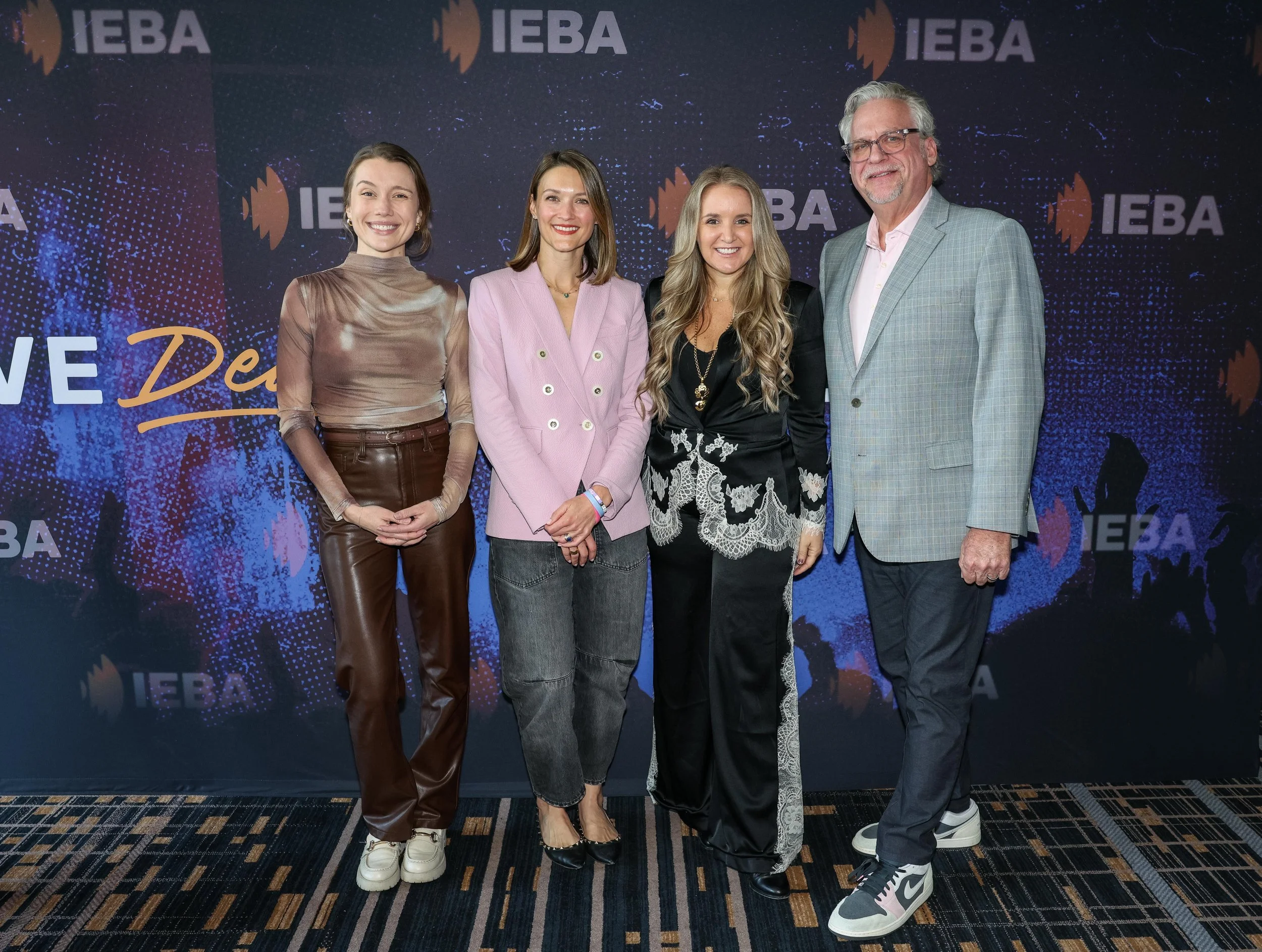
Moderated by: Annie Eifler, Gulf Coast Entertainment
Panelists: Robert Norman, CAA · Channing Moreland, Book with Eva · Kevin Underwood, Leo Events · Lauren Spahn, Buchalter
The Worst Case Scenarios panel came back for a second session, this time built around questions submitted by buyers, agents and vendors. Annie Eifler of Gulf Coast Entertainment organized them to follow the life of an event: pitching and vetting the client, making the offer, getting the paperwork back, and what happens on show day. Robert Norman of CAA, buyers Channing Moreland of Book with Eva and Kevin Underwood of Leo Events, and Lauren Spahn of Buchalter answered them, with plenty of practical advice on offers, contracts and keeping everyone calm.
Why Hire a Professional Buyer
Eifler opened with “a softball question” for the buyers: how do you convince a client to hire a seasoned buyer instead of handling it themselves or handing it to an inexperienced event coordinator? Moreland said artists have a whole team supporting them, from agent and manager to tour manager and production, while clients often don’t. A buyer goes “up to bat” for the client, but also acts as a “balancing of scales,” which sometimes means telling a client that a payment is owed, as in her stage-fire story from the earlier panel.
Underwood said clients are often running an entire program, from dinners and hotel rooms to travel and the general session, so a buyer offers “white glove service” on the talent piece. He’s surprised how often administrative assistants are buying headline entertainment for companies, and said a buyer can be a good steward of the budget: “even just working a rider might save you $10,000.”
The pitch changes with the client. For a private individual, Moreland said the buyer has to vet them “just as much as we would vet the artist” and walk them through the process, such as explaining that an offer is binding. Underwood said even new Fortune 500 clients have needed a “101 education,” including why an artist who looks available on paper may still pass. “Everybody’s calendar might be clear until it gets to the artist, and his kids might be on spring break,” he said, and no amount of money will change that.
Agents want an experienced buyer too. “Would you give the keys to your Ferrari to a 13-year-old?” Norman asked. When a first-time buyer calls CAA directly, the first question is always who their event producer is, and the bigger the artist, the more it matters. Spahn added that a buyer with pre-negotiated terms and relationships at the agencies means less back and forth and better terms. It also helps when a corporate legal team that knows nothing about live events sees an agency contract full of redlines, arrows and stamps. Someone who can say “I know this is wild, but this is just how it is done” and explain terms like force majeure and “ready, willing and able” makes the whole process go more smoothly.
Vetting the Client and Protecting the Show
Norman said knowing who the buyer is has become “more and more important all the time.” In polarizing times, artists have their own affiliations, and CAA has an in-house vetting team. “You’d be surprised what you uncover sometimes when somebody really does a deep dive,” he said. When something turns up, the agency shares it with the artist, and “many times artists have said, that’s not for me.” Asked what buyers tell a client when an offer doesn’t confirm for that reason, Norman admitted it’s sometimes easier to say the artist isn’t available than to get into a debate.
The concern runs both ways. Buyers have had to ask artists to stay off social media until after the show, and Moreland described a recent event where an artist had been posting about current events the day before performing for a nervous international client. Because the offer explained the audience in detail, her team felt confident, and the show went fine. Norman said virtually every established producer’s offer includes language that the stage is not a platform for personal or political views. “As Jake Owen said, we’re here to entertain,” he said. “If anybody doesn’t have that in their offer form, please get it in there.”
Spahn suggested going a step further with a morals clause, but thinking it through rather than just “throwing it in there.” What does the client stand for, and is its audience families with young kids or adults? Some artist-side language is so broad that anything the artist or someone they know says or does could justify canceling. She looks for language that requires a good-faith investigation or proof, ties the harm to a real impact on the company’s reputation, and spells out what happens if the clause is invoked, including whether the artist gets a chance to respond.
Confirmed Means Confirmed
Buyers often get nervous when a deal is confirmed but the paperwork hasn’t come back. Moreland said Book with Eva has data from about 4,000 events, so it shows clients a timeline with a progress bar for every step, from the three to five days a contract typically takes to payments, pre-production calls and the rider. A bound offer, she reminds them, is for all intents and purposes a signed agreement. Underwood said his client authorizations state that even upon a verbal confirmation, the program is “locked and loaded” and the client is 100% obligated.
Norman was candid that contracts don’t always come back quickly. Some touring artists barely sign until the day before or the day of the show, he said, and a few are “notoriously tardy.” It’s rarely for any reason other than habit, and he seldom sees a deal fall apart in the gap between the buyer’s signature and the artist’s. Underwood said relationships carry it: once the agency has the deposit, production has been advanced and the hotel and ground transportation are set, “we’ll get the paper when we get the paper.”
Spahn explained why that works. If both sides are acting as though the agreement is in place, by taking deposits, advancing the show, approving marketing assets or putting tickets on sale, they are performing under the contract, and depending on the state, that can make it binding. She also warned about deal points. Agencies increasingly send deal points between the offer and the contract, and they may state that only those terms are confirmed. “On its face, everything else you put in that offer, they’re saying is rejected,” she said. Buyers should read them closely and either agree to drop terms or state in writing that the rest of the offer is part of the agreement. Keep the offer focused on your true non-negotiables, so you’re not in a fight “before the contract is ever issued.”

The W-9 Question
One submitted question asked why some agencies hesitate to provide their own W-9 when a client pays the agency. Norman said CAA holds the deposit until the date plays and isn’t the end payee, so it prefers to submit the artist’s W-9. Spahn explained that otherwise the full payment is reported as the agency’s income, when the agency is really acting as an escrow agent and keeps only its commission. Norman said CAA has made exceptions in urgent cases, “but we don’t like to do it that way.”
When the Show Doesn’t Match the Paperwork
What happens when an artist contracted for 75 to 90 minutes plays 68, or skips songs on the requested list? Norman asks buyers to list songs as requests, since it’s hard to dictate a full set to an artist of that stature. When he does get a call about a short set, the event usually went well anyway, and he can think of only a time or two when a client asked for money back. Spahn has seen bigger cases, such as an artist playing 50 minutes of a contracted 75, where clients withheld the guarantee to sort it out later. “If you only play 50, you’re not playing a third of what I paid for.”
She also described a summer event where a private plane couldn’t take off and the artist went on an hour late. He then put on an amazing show, stayed for a meet-and-greet and recorded video liners for the event. “He then overperformed on the back end, which made the whole situation go away.” Knowing what went wrong and making up for it “can go a long way.”
The buyers said their job on show day is to “be a little annoying,” with regular check-ins and a cheat sheet before the artist walks on: the client’s name, not the competitor’s, the set length and the songs. Even then, things happen. Moreland had an artist who forgot their pants and performed in athletic shorts, and another who was so upset by someone on the client’s team that they weren’t going to go on, until her team got people out of the room and talked the artist down. “Sitting up here, I’m like, wow, I’ve got like 10 examples,” she said.
Shorter Sets Can Hit Harder
Norman urged buyers to listen to agents on set length. Clients often ask for 90 minutes, but an artist with five big hits may be at their best at 60. “If you make them play 75 to 90 minutes, you’re going to fill that set with longer guitar solos and deep cuts,” he said, “and that’s when everybody goes to the bar.” Clients tend to see “dollars per minute,” but the impact matters more.
Moreland said she’s relieved to see clients asking for shorter sets, sometimes 30 or 40 minutes, for “a power-packed experience.” Echoing Jake Owen’s conversation earlier in the conference, she’s also seeing fewer big meet-and-greet lines and more intimate ones with the CEO and a few executives, plus signed memorabilia to gift. Eifler mentioned a VIP experience where the artist performed a few songs for a small group.
Lightning Round
Asked for the one deal point they need in every offer, Moreland said it depends on what matters most to each client, but pre-production calls are key for safety and coordinating with a host or emcee, along with arriving the night before when travel is tight. Underwood, with many morning shows, insists on the artist arriving the night before, “based on lots of scars,” noting he’s been stuck overnight at DFW twice in the last three months. If there’s enough time and a couple of direct flights the next morning, he’ll consider changing the offer. Spahn’s favorite: no cancellation privileges outside of force majeure, inclement weather or a material breach. If an artist might need to cancel for filming, for example, that should be on the table from the start. A better tour offer “is not a reason to cancel this contract.” Underwood agreed it’s “baked in the DNA” of his offers.
Asked the reverse, which deal point he won’t accept, Norman said it varies by artist, though requests for dinner the night before or “lunch with their kids” aren’t going to happen. Every point in a thorough offer has to be reviewed, and some won’t fly with a given artist. “Try to dictate a set list to James Taylor,” he said. “Really?”
From the Q&A
Audience questions were asked away from the microphone, so some are paraphrased from the answers.
Sponsorship and performance deals. The panel said these usually go hand in hand in the same contract, with the private performance on a mutually agreeable date as part of the sponsorship bargain.
Merch design approvals. When an artist team took weeks to approve a design and then asked for changes after printing, Spahn suggested clearer language next time: the design will be deemed approved if there’s no response within a set number of days. Merch sold publicly is a different matter, since it uses the artist’s name, image and likeness for profit. Moreland suggested bringing it back to the artist’s team to find a solution, recalling that Natasha Bedingfield’s team personally shipped vinyl after an event when a planned merch item didn’t work out, “a way better thing than we were going to be able to provide.”
Getting contracts signed so corporate clients can pay. Spahn said to explain in the offer why the signed contract is needed, since corporate accounting may not release payment without it, so the agent can push the artist’s team. Some agents have even recommended no deposits until there is a fully executed agreement.
Feedback on tour managers. Norman said agents do want to hear about a difficult tour manager, especially if it’s a pattern, and his team follows up the day after every show.
What promoters miss early. Spahn pointed to getting marketing assets in time, knowing the venue and vetting vendors. She has seen events try to cancel because they couldn’t get security or their production contract fell through: “That’s on you.”
A contract that differs from the deal points on show day. Spahn said it’s fact- and state-specific, but generally the question is what terms the parties were performing under. If everyone worked from deal points that included a 70-minute set and a meet-and-greet, the artist “can’t just come back and say, oh, this is the contract now.”
Key Takeaways
A seasoned buyer brings a team, education and budget discipline that most clients don’t have, and agents prefer working with one.
Vet the client as carefully as the artist. Agencies are doing their own deep dives.
Include language keeping personal and political views off the stage, and write morals clauses precisely, with clear standards and consequences.
A bound offer is binding, and performing under an agreement can make it enforceable even before the contract comes back.
Read agency deal points closely. They may quietly drop everything else in your offer.
Listen to agents on set length. Shorter, hit-heavy sets often land better.
Make arrival the night before, pre-production calls and limits on cancellation core terms when they matter to your event.
When something goes wrong, communication and making it right count for more than the paperwork.