

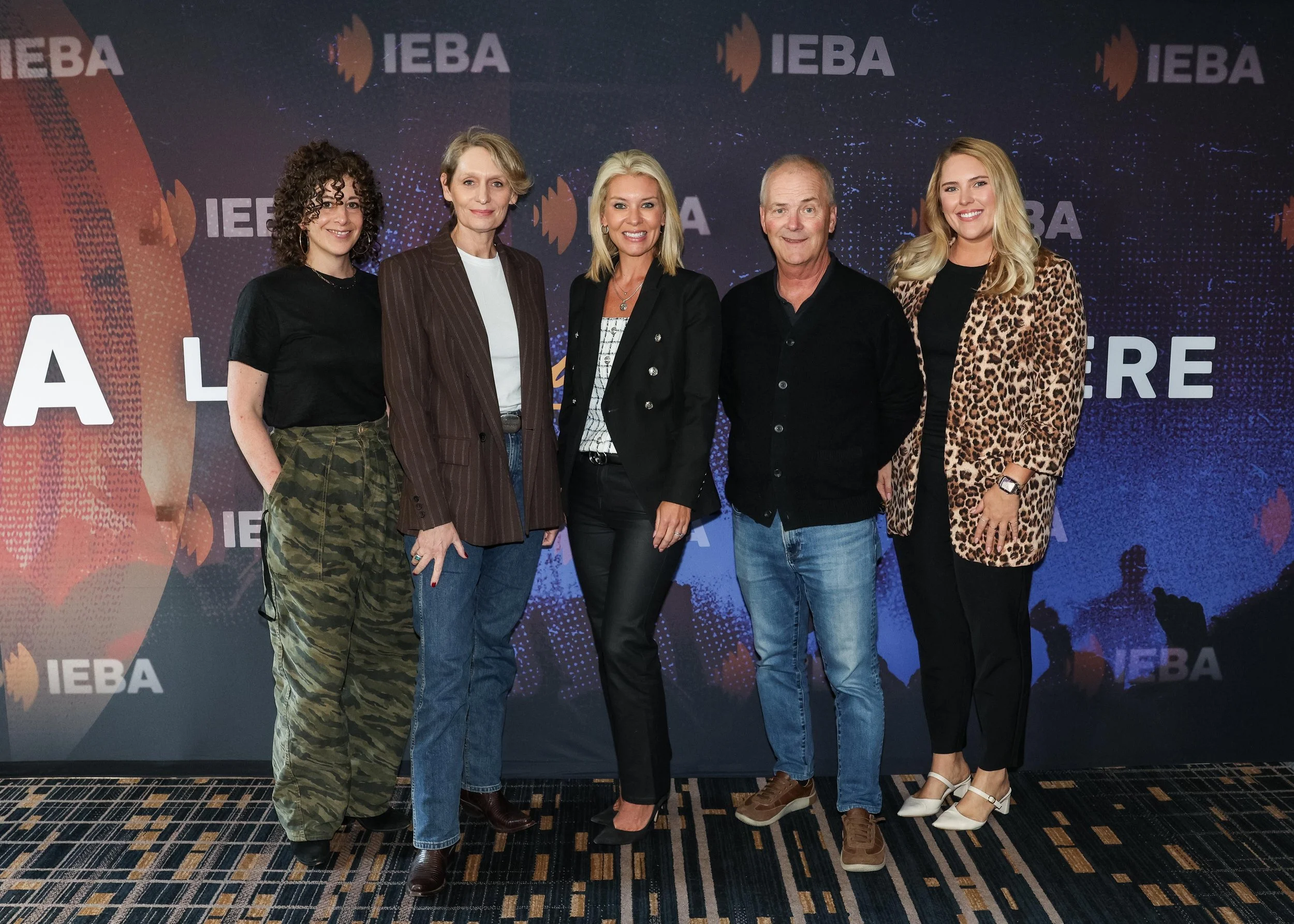
Moderated by: Milly Olykan, Live Nation
Panelists: Carly Dibble, Romeo Entertainment Group · Amy Bryan Fosgate, Activated Events · Susan Heymann, Frontier Touring · Mark Monahan, Ottawa Bluesfest & CityFolk
Sponsored by: Variety Attractions
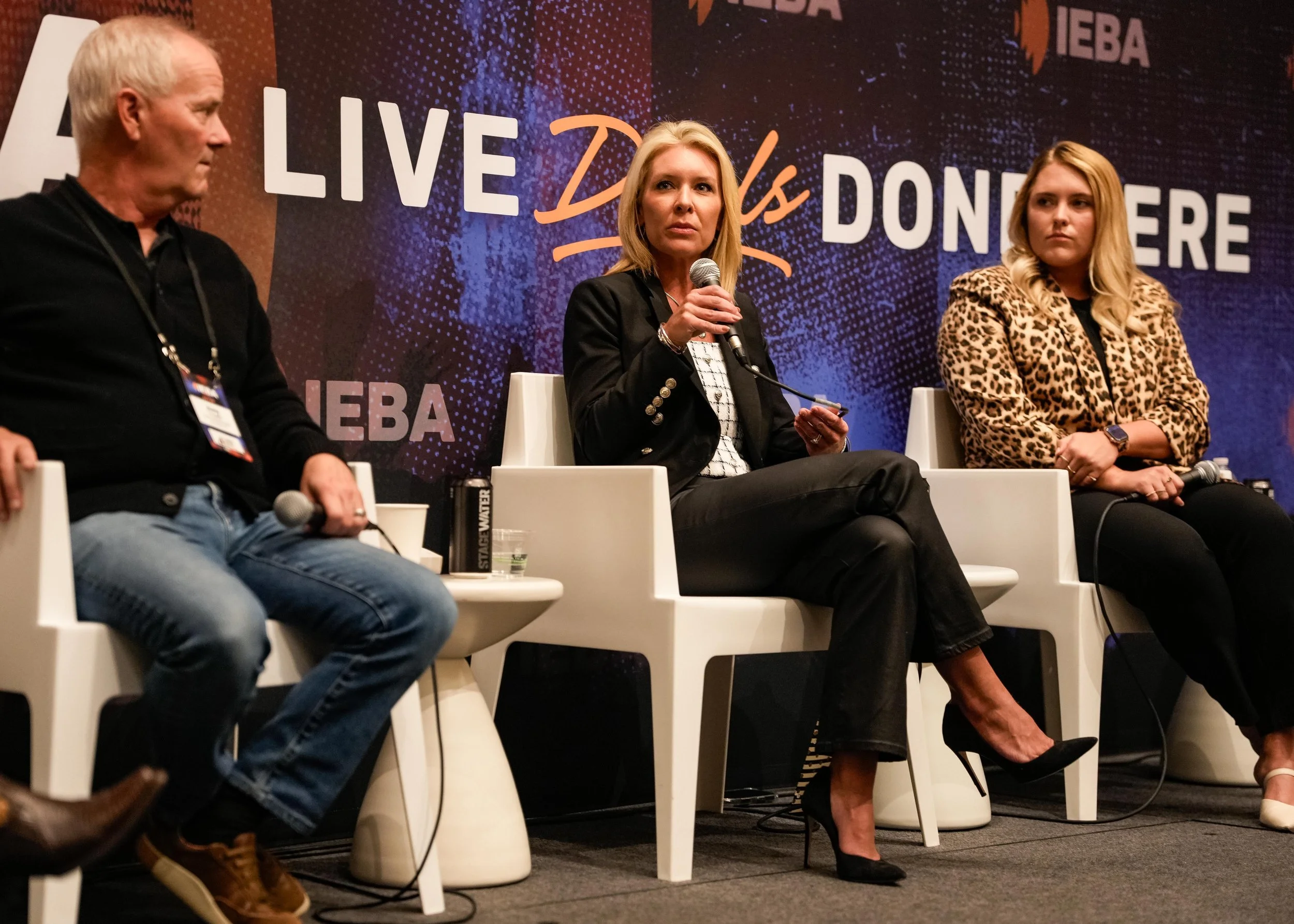
“We need to evolve. We need to bring new fans in,” Milly Olykan of Live Nation said as she framed the session, adding that fans today “know a lot more about our business” and that promoters face more financial pressure than ever. Olykan, a New Zealander based in Nashville who oversees Live Nation’s international country strategy, led what she called “a very international panel”: Mark Monahan, a founder of the 32-year-old Ottawa Bluesfest and of CityFolk; Amy Bryan Fosgate, talent buyer for Activated Events, which promotes about 20 festivals a year across Southern California, Arizona and New Mexico; Carly Dibble of Romeo Entertainment Group, who books rodeos, fairs, festivals and, recently, a cruise; and Susan Heymann, CEO of Australia’s Frontier Touring, whose country festival CMC Rocks turns 20 next year. Their answers kept coming back to the same idea: a festival lasts when it is rooted in its community, run on more than ticket sales, and protective of its reputation with fans and artists alike.
What Makes a Legacy Event
For Monahan, a legacy event is “firmly ensconced in the community,” something people talk about even when the festival isn’t happening. The harder part, he said, is staying financially sustainable. Tickets account for about 60% of Bluesfest’s roughly $25 million in revenue. The other 40% comes from operations the festival runs itself: food and beverage, merchandise, advertising and sponsorship. Because that share doesn’t depend on tickets, it “has been able to float the festival in tough times,” and he credits it with much of the event’s longevity.
Taking Risks on the Lineup
Olykan pointed out that Cheyenne Frontier Days is 130 years old, “and in the meantime you guys were throwing parties in America,” yet it still took big swings. Dibble said she and her team brought EDM to the fair this year, “not something that anyone would have ever thought would work at a fair.” The shows sometimes need to be cleaned up a bit from a club set, but they reach a completely different audience, are often more affordable, and earn the artist new fans. The same thinking led to pairing Treaty Oak Revival and Jessie Murph at Cheyenne the year before, spreading the money out “to create the value for the fan.”
The EDM night required its own marketing. The show started later, after dark, with full production, and the team had to tell fans exactly what to expect “before people don’t show up because they didn’t know.” Was she nervous? “I was very nervous until the night of,” she said, especially with fans buying tickets at the last minute. It worked, and the fair wants to do it again, “which is a win in my book.”
Fosgate described how fan surveys reshaped one of her festivals. Activated Events surveys every ticket buyer after each event and looks for patterns. Most comments are operational, such as parking, entry and bar lines, but the surveys also ask who fans want to see and collect demographics. In Albuquerque, the data showed a heavy Hispanic audience, so last year the festival added a second stage and booked Carín León, its first Hispanic artist. “It was massive,” she said. León’s set was so lively that “everybody migrated” to the second stage, and it introduced him to a new fan base at a straight-ahead country festival.
Data, Agents and Holding the Line
Asked how to hold the line with agents when the data and the festival’s vision disagree, Monahan said there is now so much data, from surveys to streaming numbers, that “it is overwhelming.” But “we’re running a live music festival, and sometimes streaming numbers don’t matter.” Bluesfest leans on a network of mostly independent promoters around North America who have had an act on their stage and seen the crowd react.
The panel agreed that no one knows a festival’s audience better than its own team. Seeing what fans respond to year after year sometimes means going against the trends, and “you have to be courageous enough to do that.” The difference between a good festival and a great one is “curation and not just booking”: an act with better numbers may still not fit the flow of the day. Panelists recommended seeing an artist live before booking, since an agent may not have seen the show either. Dibble, who recently moved back to Arkansas, said she reads the trade press and listens to agents, but also asks what people are actually listening to when she visits a client in “the middle of nowhere, Nebraska,” because that is often where the next big thing shows up.
Programming From the Other Side of the World
Heymann said that in Australia, programming starts with a more basic question: who will make the trip? An American country artist “can play a state fair and make a million dollars, or you can fly 15 hours and pay for 35 airfares and be in market for 10 days and have jet lag and make a million dollars.” She said Luke Combs was the artist who really broke that barrier, and more acts now want to build an international market. Still, CMC Rocks programs 20 to 25 international acts a year, has exclusivity for everyone except headliners and their support acts, and sometimes books artists “a little prematurely,” only to see them blow up and be unable to return so soon.
Monahan added that “it’s not always about the money.” A festival sells itself not only to ticket buyers but to the artists, the tour manager, “the bus driver” and suppliers, and Bluesfest has landed acts because a friend told them it was a great place to play. Heymann agreed, while noting that for managers, the trip is still a business decision. She shares case studies like Wyatt Flores, who played two sets at CMC Rocks. The excitement on site was so tangible that Frontier pulled his tour forward from about 10 months out to two weeks after the festival, and he sold 5,000 tickets in Brisbane, the closest city to the festival, compared with 1,500 to 2,000 in Sydney and Melbourne on the same run.
Fans Who Know the Business
Heymann said audiences are “much more emboldened” online. CMC Rocks sells 70 to 80% of its tickets before announcing the lineup. Its lineup post last year drew about 10,000 likes, 10,000 shares and roughly 300 comments. This year’s 20th-anniversary announcement drew about 11,000 of each and 3,000 comments, with fans debating whether stadium acts like Ella Langley and Morgan Wallen should play a 20,000-capacity event. She reads all of it, but said loyal fans “self moderate in a really beautiful way” when the experience is good, pushing back on the negativity themselves.
A headliner that is too big can backfire, she warned. An Australian pop festival that had Kendrick Lamar and Doja Cat one year faced backlash the next year with Lewis Capaldi and RAYE, “all great artists, all great headliners.” In 2023, CMC Rocks went on sale with Morgan Wallen already announced, and it sold out so fast that fans of 15 years asked the festival to go back to selling without a lineup “so that we know the real fans will be there.” You can do yourself damage, she said, “if you land that white whale.” Olykan’s view: “You can’t please everyone, and negative comments are still engagement.”
Dibble said transparency helps bring fans along. At one festival, the team worked with Nashville-based Raised Rowdy and a local creator who serves as the face of the event. When weather delayed the show this year, they sat in a camper and filmed a video explaining that the delay was for lightning, why it was for fans’ safety, and how the rules work, rather than just “getting attacked” in the comments.
Taking Care of Artists
Monahan said Bluesfest doesn’t go over the top. Everyone gets similar amenities, good trailers, access and parking, and the most important thing is to communicate up front what the festival can and can’t provide, so no one arrives expecting a rider that was never going to be honored. Panelists described the site as the artists’ and crew’s “home for a day”: skip the full rider, but cover the short list of things that make the day easier, especially great catering in the heat and friendly artist relations staff.
Heymann added a massage therapist backstage at CMC Rocks, since many artists drink less than they used to and are flying across the world for three days. “Your reputation is the thing that works for you when you’re not around,” she said, and from Australia, artists and tour managers who praise the festival are “doing your work for you.” Monahan’s surprise hit is lower-tech. A technical director created “Snack-a-Rama,” a self-serve station with soft serve, a slushy machine, popcorn, candy and free Costco hot dogs. “It’s crap, okay?” he said, but it is so popular that one or two people work full-time restocking it.
Landing George Strait
Fosgate said most Activated Events festivals are one-day shows of 10,000 to 20,000 people in city parks. Keeping artist costs reasonable keeps ticket prices low, and the festivals add value with experiences like whiskey tastings and a sports bar during football season. The Albuquerque festival at Balloon Fiesta Park began as a one-day event three years ago in a market of five to six hundred thousand people, which was a risk in itself. It grew to two days with Cody Johnson in year two, then added a different lane with Post Malone and Jelly Roll in year three.
For year four, she landed George Strait. She had asked about him every year for about 15 years for the Calgary Stampede and was always told no. Strait hadn’t played Albuquerque since 2013, so she asked again, giving it “about a 2% chance.” The negotiations kept moving in the right direction, and Strait is confirmed for 2027. The festival is expanding to three days, and capacity is growing from about 30,000 to 75,000. It’s now a national destination, with many buyers flying in. As for following it up, she said plenty of great artists still haven’t played the market, and “as long as it’s a great lineup,” people will come.
Learning From Mistakes
Monahan shared the hardest lesson in Bluesfest’s history. In 2011, on the festival’s final day, a storm blew over the main stage while Cheap Trick was playing. The show was called with about five minutes to spare, and no one was hurt. Afterward, the festival refunded single-day tickets but did nothing for 10-day pass holders. The next year, it lost about a third of them. “I think that was a mistake on our part,” he said. Heymann said her own lessons have been smaller, such as too broad a merch range, drinks priced too high or program clashes, but they all come down to “being willing to be humble about the feedback you’re getting” and course correcting.
From the Q&A
On BI and AI tools for pricing and merch: Heymann said her team relies on sales data and experience and hasn’t dug into AI tools yet. Another panelist said they use AI mainly for quick research on what others in the market charge, data that used to be hard to get.
On site layout and traffic flow: Bluesfest’s site is small, so it sometimes passes on sponsor activations that don’t have a good location. CMC Rocks runs two main stages side by side with no clashes, plus a multi-purpose tent for kids’ entertainment, songwriter sessions and late-night karaoke, which Heymann said avoids foot-traffic problems by design. Olykan recalled that at CMA Fest, artists who blew up after being booked caused bottlenecks, so the next year the team planned for those moments, with safety first, and captured them for social media.
On refreshing a 42-year-old festival: Monahan said “programming is what rejuvenates your festival,” along with on-site experiences beyond the beer tent. Bluesfest built themed destination bars, including a Mexican bar, a country bar and a British pub. Panelists pointed to Dibble’s EDM booking as a way to reach a new generation, along with brand activations and marketing that gets the event onto younger fans’ radar. Olykan encouraged going to shows to see who is really in the audience, because “it’s not 19-year-olds, it’s 13-year-olds.”
On starting a festival: Monahan said CityFolk runs on a tenth of Bluesfest’s budget. “It doesn’t have to be big.” Start at a level you can finance, and get buy-in from your municipality, which may help with startup costs or a rent-free public facility.
On winning over a city for an urban festival: Find a champion, such as a councillor or someone in public works, and sell them on a vision that “shouldn’t be to make a million dollars,” Monahan said, but to put on a festival that sustains itself and makes lives better. Dibble described a second-year Colorado festival next to a Catholic church that worked closely with the city council, knocked on doors and added a quiet-hour set change at 5 p.m., prime festival time. Fosgate said her city-park festivals partner with schools and malls for parking and run shuttles, and about 80% of their staff is local, which carries weight with the city.
Key Takeaways
Root the event in its community, and diversify revenue beyond tickets through food and beverage, merch and sponsorship to weather tough years.
Use surveys and data to spot patterns and new audiences, but curate for show flow and your own audience rather than following streaming numbers alone.
Calculated risks, like an EDM night at a 130-year-old fair or a Latin headliner on a second stage, can bring in new fans, as long as the marketing tells them what to expect.
Sell the event to artists, crews and suppliers, not just ticket buyers. Reputation does the work when you’re not in the room.
A bigger headliner isn’t always better. Manage fan expectations, and know when a “white whale” could hurt the event’s long-term identity.
Be transparent with fans, whether it’s a weather delay or what an artist will and won’t get on site.
Take care of every type of ticket holder when things go wrong. Bluesfest lost a third of its pass holders after refunding only single-day buyers.
Start at a size you can finance, and win local government over early with a champion and a clear vision.