

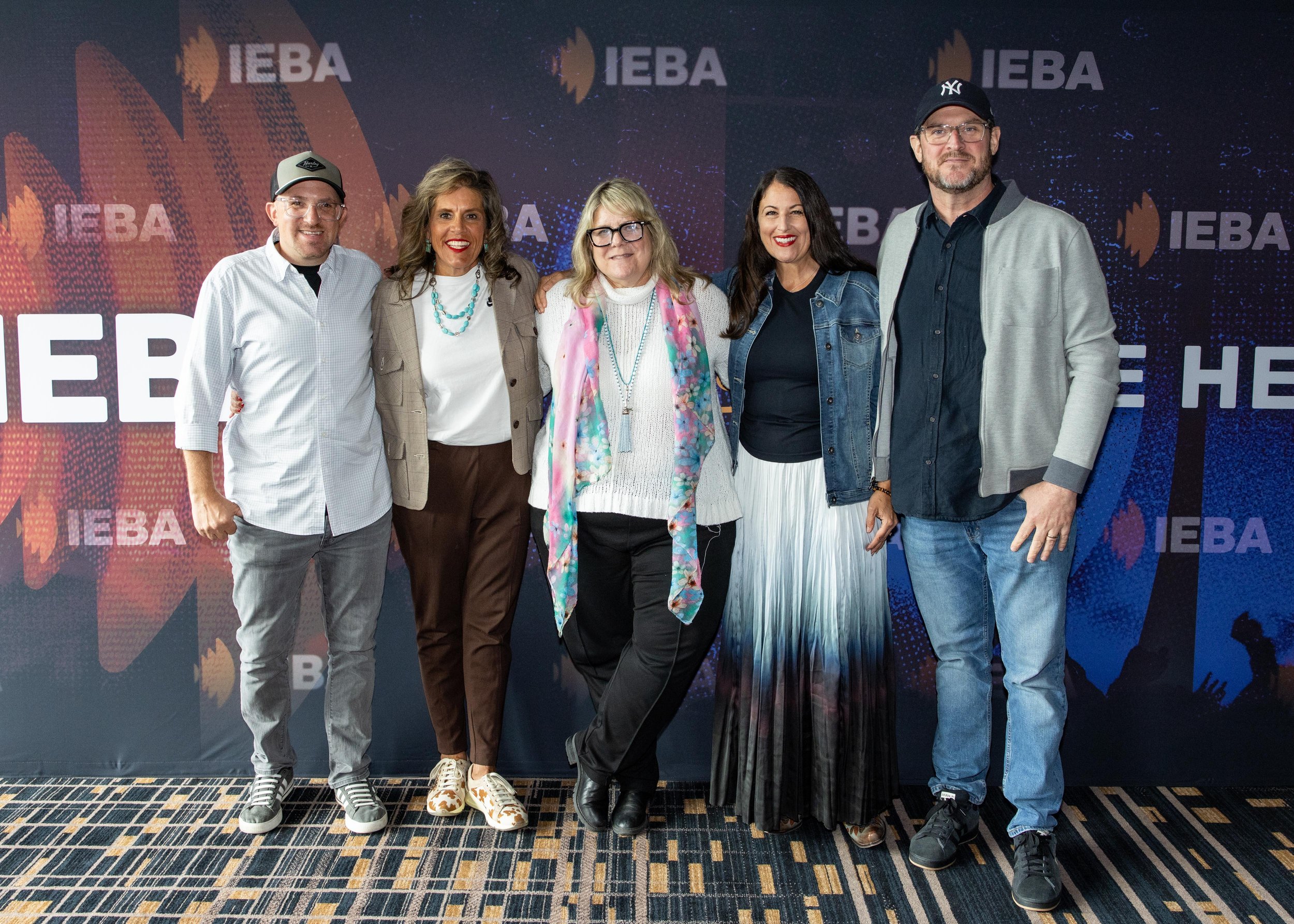
Moderated by: Deana Baker, Choctaw Casino Resort
Panelists: Laurie Jacoby, Brooklyn Sports & Entertainment · Kevin Kastrup, THE•TEAM · Lucy Lawler-Freas, Fox Theatre Atlanta · Adam Weiser, AEG Presents
Sponsored by: Cast & Crew Sports & Live Entertainment
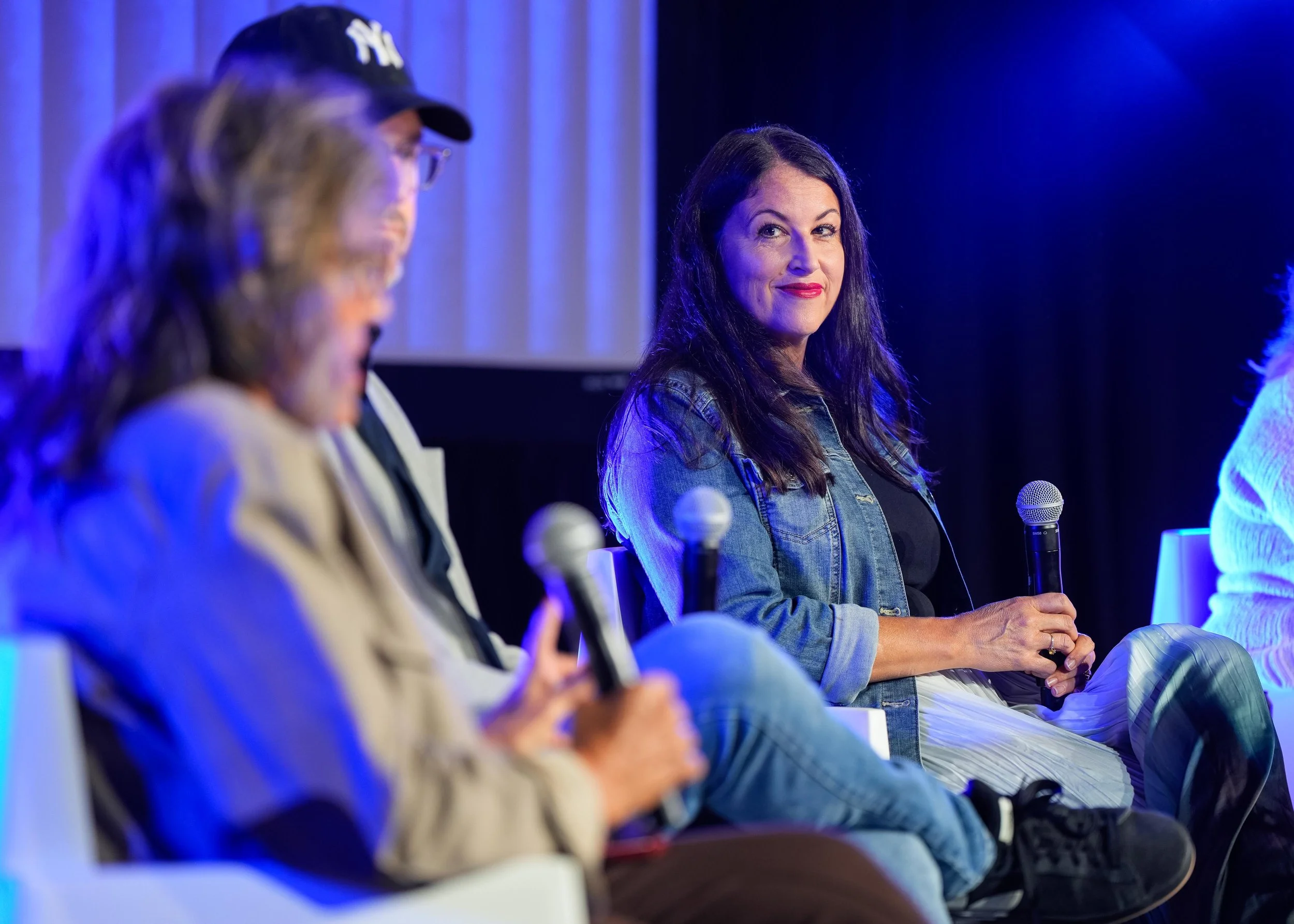
Deana Baker, IEBA’s 2025 Casino Buyer of the Year, opened the 2026 conference’s first panel by bringing up four of last year’s award winners: Major Agency Agent of the Year Kevin Kastrup, Theater of the Year honoree Lucy Lawler-Freas of the Fox Theatre, Venue Executive of the Year Laurie Jacoby of Barclays Center, and Promoter of the Year Adam Weiser of AEG Presents. “This is nerve-wracking if you haven’t done this before,” she admitted, before asking each panelist to look back on their year.
A Year of Wins Built on Variety and Purpose
Kastrup pointed to a roster that delivered across genres. “Weird Al Yankovic had two major tours over the last couple of years,” he said, and Foreigner’s 50th anniversary run is continuing into next year. Agency-wide, Noah Kahan sold out baseball stadiums across the country. “We’ve had a pretty good year with a wide variety of the roster.”
At the Fox, roughly half of the calendar is Broadway, and titles like Hamilton and Wicked continue to drive ticket sales. Lawler-Freas said comedy has been a growth area, with more multiples on sale. “I think a lot of it has to do with ticket prices and diversity in the programming.”
Jacoby said Barclays Center leans on that same diversity. Alongside headliners like Megan Moroney and Ariana Grande, the building hosts independent promoters who bring Caribbean and Chinese shows. “We don’t just lock into what’s touring,” she said. “We really try to have our arena be available for anybody who has tapped into a particular artist or audience.”
For Weiser, the year came down to purpose. “Everything that we work on seems to be rooted with purpose,” he said. He pointed to Zach Bryan in Ann Arbor, the largest ticketed show in North America, Megan Moroney’s first arena tour, and Luke Combs selling out three nights at Wembley, about 250,000 tickets. Even underperforming shows count. “To learn something from them and to be able to grow on them with the artists that we work with, I look at all of it as a win.”
Baker added that Choctaw books across genres, including Vietnamese, Korean and Filipino programming, and often sees artists before they break. Watching Megan Moroney grow from Choctaw’s stage to the American Airlines Center was a highlight. “We all play a part in the growth of an artist,” Weiser said, “just in different ways.”
Standing Out: Relationships, Hospitality and Showing Up
Asked what makes an agent, promoter or venue stand out, Kastrup kept it simple. “It’s a relationship business,” he said. “That’s the core of anything that we do, how easy it is to work with someone and have an honest and open conversation in the good times and in the bad.”
Lawler-Freas said that applies to everyone who walks through a venue, from agents and promoters to tour managers and fans. “There’s lots of competition in every market, and you want to be the place that people feel welcome, they feel safe, and they have a really great experience in your room.”
Jacoby described Barclays Center’s “street to seat” approach, which covers both the fan journey and the crew. “When the first truck rolls in, how is that crew on the road being treated? That’s the top of your day,” she said. “We always try to make it feel like it’s their home for the day.” She was blunt about where booking still happens. “I know so many of us are like, AI, AI. AI is not booking a show. It’s who you’re talking to in long-standing relationships.”
Weiser, now 20 years at AEG, said people in the industry tend to identify by their company, but “your identifier is yourself.” He explained why AEG keeps returning to Barclays. “It works, in the good and the bad,” he said. “She’s not just Laurie from Barclays Center. It’s Laurie Jacoby.” He also urged buyers to be present. “I still get excited when the trucks roll in. But I know some people that book and then don’t show up, and that’s a missed opportunity.”
Baker said the goal is to give artists a normal day. “You can walk around the building and nobody’s going to ask you for an autograph,” she said. “You can be you for the day.”
Fixing the Fan Experience
Weiser named the year’s biggest miss. “We’ve made it really hard for fans to enjoy an event,” he said. He contrasted standing in line at Tower Records with $25 in cash to today’s experience: “You’re number 623,000 in the queue. Then there’s a little ticker that says you have five minutes to buy the ticket and it’s $500. How do we do better?”
Jacoby said artist buy-in matters, but resale is hard to control. Some artists turn off resale or offer random lower-priced lotteries, like the Rolling Stones’ “lucky dip” or programs from Ariana Grande, Olivia Rodrigo and Charli XCX. “The things we can control is how they feel in your building,” she said.
Lawler-Freas said the worst moment is a fan whose secondary-market ticket doesn’t scan. “For me, it’s really, how do we educate the fan? Buy the tickets directly so that you’re not in that hassle and out a bunch of money.” Kastrup agreed. “You want the cheapest price ticket with the lowest fees? Go to the box office.” Jacoby added that great seats are often released the day of the show once production holds are freed.
With a night out for four now approaching $1,000, “and a babysitter,” venues are adding value in other ways. Jacoby described three no-phone nights with Phoebe Bridgers, where Barclays couldn’t capture any content. The team created free tarot-card keepsakes each night, added a photo booth inside the venue and stenciled sold-out messages on the plaza. “We had more engagement than if we were allowed to have actual footage,” she said, “because people saw it as unique to her shows.”
Right-Sizing the Room as Costs Climb
Weiser noted how fast prices have moved. Less than a decade ago, a club ticket over $50 was unthinkable. Now the target is an all-in price under $100. He asked how venues are handling artists who return every 14 to 18 months.
Lawler-Freas said many artists jump “from a 2,500-seater straight to an arena, and not necessarily because they should.” With high prices dampening sales, some are now heading back to 4,500-capacity rooms. “It’s cyclical in our business,” she said, and she expects more of that into next year.
Kastrup said multi-night runs can be a strategy, not a step backward. He cited LCD Soundsystem’s long Brooklyn and Queens residencies and Harry Styles’ 30 nights at Madison Square Garden. “You can be a little bit methodical about the multi-night run in certain markets. You gotta know where your strengths are.” When an artist does need to step down, “you just have to massage it, and you have to be honest,” framing a residency as a new model rather than a failure.
Baker raised rising costs, with a $100,000 act now asking $200,000. “Somebody’s gotta pay,” Kastrup said. “This ecosystem is larger than what we do here on the stage. The touring party for a regular theater act could be 20 to 30 people.” He said the middle-of-the-road show is the hardest to make work, and the answer is to sell artists on the long game. “It’s not about one show. This is a relationship that we’re cultivating over many years.”
Lawler-Freas said buildings will get creative to land residencies and multiples, including through food and beverage. Weiser said aligned goals beat a bidding war. If no one brings the show, that night is dark. “For years it was whoever made the best offer won,” he said. Now, when a venue offers an extra dollar, “that dollar’s gonna come if it’s the right show. Don’t let that be the driver.

Holds, Avails and Staying in the Know
When offers are equal, Kastrup said, history decides. “If it’s a jump ball and you have a working history with a certain promoter or a certain venue, they’re probably going to win out. If it ain’t broke, don’t fix it.”
Weiser said venue bookers act as the entertainment director of their city, and they want to know the plan, even when the answer is no. “The last thing I want is to not know that someone was touring and then see an Instagram post that it’s playing down the road,” Jacoby said. “I at least want to be in the conversation.” She also keeps every call alive. “If they ask for one date and I don’t have it, I’m offering them five other dates around. I don’t hang up the phone.”
Weiser said follow-up runs both ways. A hold means a promoter is interested, but if a building never checks in, the show may move on without it. “There are building bookers, and there are people who book buildings,” he said. The best partners say, “I know this is the right room for this show. So what do we have to do to make this happen?”
Audience Q&A
Opening a new venue. Jacoby recommended hiring someone with existing booking relationships. Lawler-Freas suggested building promoter relationships and landing a big act early “to make a splash.” Weiser stressed knowing the market and the venue’s purpose. Kastrup told newcomers to come to conferences like IEBA and “seek us out.” Baker shared her own start. “When I started, I knew nobody in the room. I just asked a lot of questions and I made a lot of calls,” she said. “Find somebody that has been around and ask them to help you. And they will.”
Kastrup and Baker also encouraged new buildings to get to know venues within a few hundred miles and become routing partners. Lawler-Freas added that open avails can be an advantage when another room in town is booked. “Don’t skip the market, come to me.”
Vetting promoters. The Fox uses an application process with references. “If you’ve successfully done shows in 2,500-cap rooms and I can call those rooms and get a good reference, then you’re welcome to do the show,” Lawler-Freas said. Jacoby said Barclays does the same. “I want to make sure someone’s not going to lose their shirt.”
Taking on an artist. “The relationship part has to work,” Weiser said. “I’m going to talk to you more than I speak to my wife and my kids.” Jacoby said venues should support their promoter partners but stay proactive: “You can’t just wait for the phone to ring.” Lawler-Freas noted a large theater has to be selective. “I can’t do a show that’s only going to do 800 tickets, because nobody’s going to win.” Baker said she sometimes calls agents about artists before they’re on anyone’s radar, weighing demographics, genre and fit for the casino.
Secondary and tertiary markets. Asked how a buyer in Lexington can attract major tours, Kastrup said routing is ultimately an artist and manager decision. Tours often focus on major and secondary markets first, with tertiary dates added on a second run. He suggested keeping a standing offer on file. He also advised watching festivals within 400 miles, since radius clauses now reach 300 to 500 miles. Weiser said buyers should come with the “why.” He described a buyer who kept pushing Koe Wetzel for Reading, Pennsylvania, which became the fastest sellout of the tour. “Promote your wins,” he said, and be honest. “The best thing to do is actually tell us that a show won’t work in the market.” Kastrup agreed. “Even the agent, believe it or not, we really want the shows to go well.”
Key Takeaways
Diverse programming, from Broadway and comedy to independent and international promoters, helped each winner’s building or roster thrive.
Relationships, not offers alone, decide close calls, and they are built in good times and bad.
Hospitality for crews, artists and fans, “from street to seat,” is how venues stand out.
Fans face high prices and resale confusion, so educating them and adding value in the building matters.
Rising touring costs and diminishing sales are pushing some artists back to smaller rooms and multi-night runs.
Stay in the know, follow up on holds, bring data on why a show will work and be honest when it won’t.ings.” That line still guides their choices.